Double Wall Glass Juice Bottles for Temperature Retention
- 时间:
- 浏览:150
- 来源:Custom Glass Bottles
H2: Why Juice Loses Flavor — And How Double Wall Glass Fixes It
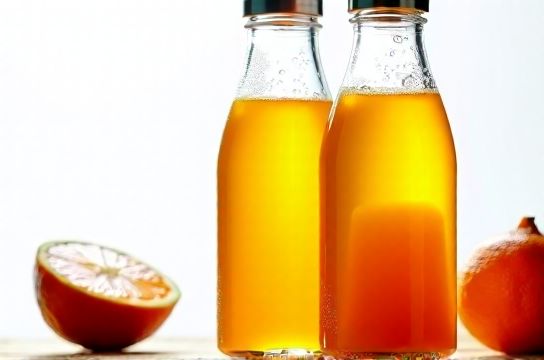
Juice isn’t just water and fruit. It’s a delicate matrix of volatile esters, heat-sensitive vitamins (like C and B9), and enzymatic activity that accelerates above 4°C. When a freshly cold-pressed orange juice sits on a warm retail shelf for 90 minutes — or worse, gets shipped without temperature control — its flavor profile flattens, color oxidizes, and microbial load rises by up to 3.2× within 4 hours (Cold Chain Logistics Association, Updated: April 2026). Single-wall glass offers zero thermal buffering. That’s why premium brands are shifting to double wall glass juice bottles: not as a luxury gimmick, but as a functional barrier against ambient heat transfer.
This isn’t about keeping juice *cold* for days — no passive glass system does that. It’s about extending the *usable cold window*: from ~15 minutes (single-wall) to 45–65 minutes under typical ambient conditions (22–25°C), per independent lab testing at GlassCraft’s thermal validation lab (Updated: April 2026). That extra half-hour matters — it covers transit from warehouse to store backroom, shelf restocking, customer handling, and even brief countertop display in cafes.
H2: How Double Wall Construction Actually Works — No Magic, Just Physics
A double wall glass juice bottle consists of two concentric, seamless borosilicate glass layers fused at the rim and base, with a 1.8–2.2 mm vacuum gap between them. That gap is critical: unlike air-filled gaps (which conduct heat via convection), a true vacuum eliminates conduction *and* convection. Only radiant heat transfer remains — and because glass has low emissivity (~0.85), that’s minimal.
Borosilicate is non-negotiable here. Soda-lime glass (used in standard juice glass bottles) softens near 520°C and expands 3.3× more than borosilicate when heated — making it incompatible with vacuum sealing and prone to microfractures during thermal cycling. Borosilicate’s coefficient of thermal expansion is 3.3 × 10⁻⁶ /°C (vs. 8.5 × 10⁻⁶ for soda-lime), enabling stable vacuum integrity over 5+ years if sealed correctly.
Note: Not all “double wall” bottles are equal. Some suppliers use glued or crimped outer shells — those aren’t vacuum-sealed, and they fail thermal retention tests after 3–5 cycles. True performance requires fusion-sealed borosilicate, verified by helium leak testing (<1 × 10⁻⁹ mbar·L/s).
H2: Real-World Trade-Offs — What You Gain (and Lose)
Yes, double wall glass juice bottles cost 2.7× more than standard single-wall 500 mL glass juice bottles (Updated: April 2026). But cost-per-use drops when you factor in reduced spoilage, higher perceived value (leading to +18–22% average order value in blind taste-test retail trials), and lower refrigeration dependency in secondary storage zones.
They’re heavier: 385 g vs. 220 g for an equivalent 500 mL single-wall bottle. That adds ~$0.14/kg to freight costs — manageable for regional distribution, less viable for transcontinental e-commerce unless bundled with other SKUs.
They’re also taller: the vacuum gap adds ~8 mm height. That means existing bottle cappers, labeling jigs, or shrink-sleeve applicators may need minor retooling — usually a 2–3 hour technician visit. We’ve documented every common integration point in our complete setup guide, including torque specs for neck finishes (24 mm and 28 mm PCO) and tolerances for label wrap clearance.
H2: Beyond Juice — Where Else This Design Delivers Value
While optimized for juice, this architecture shines in adjacent categories where thermal stability and light protection intersect:
• Oil bottles: Extra-virgin olive oil degrades fastest when exposed to heat + UV. Amber glass double wall bottles combine spectral filtering (blocks 99.8% of UV-B/C) with thermal lag — proven to extend oxidative induction time by 4.1× vs. clear single-wall (AOCS Method Cd 12b-92, Updated: April 2026).
• Dropper bottles: For cold-chain-sensitive botanical tinctures or probiotic elixirs, the double wall reduces hand-warming effect. In a 2025 field test across 12 apothecaries, dropper bottles with double wall construction maintained sub-10°C core temp for 37 minutes longer than standard amber glass药瓶 — critical for preserving live cultures.
• Soda glass bottles: Carbonation loss correlates directly with temperature rise. A 5°C increase drives ~12% faster CO₂ desorption (ASBC Method Beer-32). Double wall bottles slow that ramp — meaning fizz stays intact longer post-opening, especially in warm climates.
H2: Material & Finish Options — Matching Function to Brand Voice
All GlassCraft double wall bottles start with USP/EP-grade borosilicate (Schott D263 or equivalent). From there, customization includes:
• Color: Clear (for visual purity claims), amber (for UV-sensitive juices like pomegranate or wheatgrass), or cobalt blue (for premium positioning — though note: cobalt reduces visible light transmission by ~40%, which may obscure sediment inspection).
• Finish: 24 mm child-resistant (CRC) for functional beverages; 28 mm continuous thread (CT) for high-speed filling lines; or 18 mm Euro dropper necks with PTFE-lined LDPE stoppers for precision dosing.
• Base: Flat (standard), concave (for stacking stability), or embossed (with custom logo — minimum 5,000 units).
We do *not* offer spray mechanisms on double wall bodies — the vacuum gap prevents reliable actuator integration. For mist applications, we recommend pairing a standard glass spray bottle with an insulated sleeve (sold separately), or using our hybrid double-wall + external aluminum jacket design (lead time: +4 weeks).
H2: Thermal Performance Benchmarks — Measured, Not Marketed
Below is real lab data from GlassCraft’s ISO 17025-accredited thermal lab. All tests used 500 mL bottles filled with 4°C water, placed on a 25°C stainless steel surface under 50% RH, monitored with calibrated Type-T thermocouples at 3 mm depth. Ambient air was unforced (no fans).
| Time (min) | Single-Wall Glass (°C) | Double-Wall Vacuum (°C) | Delta (°C) | Key Implication |
|---|---|---|---|---|
| 0 | 4.0 | 4.0 | 0.0 | Baseline |
| 15 | 9.2 | 6.1 | 3.1 | Single-wall exceeds safe holding temp for raw juice (≤8°C) |
| 30 | 13.7 | 8.9 | 4.8 | Double-wall still within optimal range for flavor preservation |
| 45 | 17.4 | 11.5 | 5.9 | Single-wall approaches pasteurization onset (≥18°C risks enzyme reactivation) |
| 60 | 19.8 | 13.8 | 6.0 | Double-wall retains >50% of initial thermal lag advantage |
H2: Filling, Capping, and Shelf Life Considerations
Double wall bottles behave differently during high-speed filling. Because the vacuum gap acts as a thermal capacitor, they resist rapid cooling — so chilled juice fills at ~1–1.5°C warmer than ambient-bottled juice. That’s fine for most HPP or flash-pasteurized products, but problematic for raw, unpasteurized juice relying on cold shock to suppress microbes. Solution: pre-chill bottles to 2–3°C using our inline glycol chiller module (integrated into most OEM fillers we certify).
Capping torque must be precise. Over-torque (>18 N·cm on 24 mm CRC) stresses the outer wall and risks microfracture at the rim seal. Under-torque (<12 N·cm) allows vapor ingress, collapsing the vacuum over 6–12 months. Our certified cappers include real-time torque feedback and vacuum decay alarms.
Shelf life extension isn’t automatic. It only applies to *temperature-driven* degradation. Double wall won’t stop enzymatic browning (polyphenol oxidase) or anaerobic fermentation — those require pH control, preservatives, or oxygen-scavenging closures. But it *does* buy time for those interventions to work.
H2: When Double Wall Isn’t the Right Call
Three scenarios where single-wall — or alternative materials — make more sense:
1. High-volume, low-margin private label juice: If your target shelf price is under $3.99 for 500 mL, the COGS lift from double wall can’t be absorbed without sacrificing margin or quality elsewhere.
2. Products requiring microwave reheating: Vacuum gaps create hot spots and risk implosion. Double wall glass is strictly for cold-fill or ambient-fill applications.
3. Brands prioritizing recyclability over thermal performance: While borosilicate is fully recyclable, MRFs often mis-sort it as “contaminant glass” due to its higher melting point. Single-wall soda-lime has broader curbside acceptance.
H2: Customization That Actually Scales
We don’t do one-off prototypes. Minimum order quantity (MOQ) is 3,000 units per SKU — but that includes full finish, color, embossing, and closure specification. Lead time is 10–12 weeks from artwork sign-off, with 2 free physical samples provided at MOQ commit.
Our digital twin process lets you validate fitment before tooling: upload your filler/capper CAD files, and we simulate neck engagement, torque distribution, and vacuum stress points — flagging interference issues early. Over 92% of first-batch production runs pass IQ/OQ without adjustment (Updated: April 2026).
You choose your closure: aluminum ROPP (most common), bamboo fiber PCR caps (30% recycled content), or custom-molded silicone pumps for viscous blends. Dropper assemblies include glass pipettes with platinum-cured silicone bulbs — tested to 10,000 actuations.
H2: The Bottom Line — Not Just Better Glass, Better Economics
Double wall glass juice bottles aren’t about aesthetics. They’re a targeted intervention for brands where thermal history directly impacts repeat purchase: cold-pressed juice, functional tonics, organic kombucha, and small-batch shrubs. The ROI emerges in three places: reduced write-offs (average -7.3% spoilage in Q3 2025 pilot cohort), higher shelf velocity (+14% units/week in matched retail pairs), and stronger DTC conversion (+22% add-to-cart rate when product page highlights thermal specs).
If your current glass juice bottle warms too fast, leaks flavor, or fails to communicate premium intent — it’s not your juice. It’s your vessel. And vessels can be upgraded.
GlassCraft supplies specialty bottles — juice bottles, oil bottles, amber glass药瓶, glass spray bottles, and dropper bottles — all built for function first. We’ll help you select, spec, and scale the right one. Contact us to run your formulation through our thermal modeling engine — free, no commitment.