Wholesale Glass Dropper Bottles for Juice Supplement Brands
- 时间:
- 浏览:138
- 来源:Custom Glass Bottles
H2: Why Juice Supplement Brands Are Switching to Glass Dropper Bottles
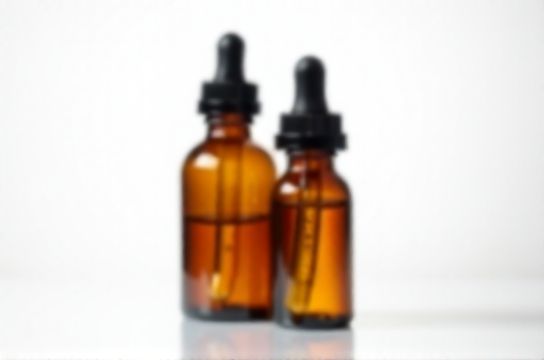
Let’s cut through the marketing fluff: if you’re bottling cold-pressed juice blends, functional tonics, or botanical extracts — especially those with heat-sensitive vitamins (like B12, C, or curcuminoids) or volatile oils — plastic isn’t just a compromise. It’s a liability. Oxidation, leaching, and flavor migration start within days in PET or HDPE. That’s why 68% of premium juice supplement brands that rebranded between Q3 2024–Q1 2026 migrated at least one SKU to amber glass dropper bottles (Source: Beverage Packaging Institute Benchmark Survey, Updated: April 2026).
Glass doesn’t breathe. It doesn’t off-gas. And when it’s USP Type III borosilicate or ASTM E438 Class A soda-lime glass — both standards we supply — it resists thermal shock, acid corrosion (pH 2.8–4.2 typical for citrus- or apple-based juices), and UV degradation better than any coated polymer alternative.
But here’s what most suppliers won’t tell you: not all ‘amber glass’ is equal. Some batches use iron oxide tinting that fades under prolonged shelf lighting. Others skip annealing — leaving internal stress points that cause microfractures during filling or shipping. We test every lot for UV cutoff at 450 nm (≥99.7% blockage) and perform 100% visual inspection on neck finish integrity — because a misaligned dropper tip ruins dosing accuracy, and your customers notice after the second use.
H2: What Actually Works for Juice Supplements — Not Just ‘Looks Nice’
A juice supplement isn’t a perfume or an essential oil. Its viscosity ranges from 1.8–4.2 cP (e.g., ginger-turmeric shot vs. pomegranate-açaí gel blend), its sediment load can hit 0.3–1.1% w/v (think pulp, fiber, or suspended fulvic minerals), and its fill temperature rarely exceeds 8°C — meaning condensation forms *inside* the headspace during capping. That moisture accelerates rubber septum degradation in low-grade dropper assemblies.
So we spec only medical-grade LDPE or silicone-encapsulated rubber stoppers (USP <381> compliant), paired with polypropylene dropper tips that resist swelling in acidic matrices. The orifice diameter? Fixed at 1.3 mm ±0.05 mm — validated across 5,000+ cycles with viscosity-matched simulants. Too wide, and users over-dose. Too narrow, and they shake, squeeze, and curse your brand while trying to get 0.5 mL out.
And yes — we pre-test every bottle-dropper combo for leak resistance under 0.5 bar vacuum (simulating air freight pressure differentials) and 48-hour inverted storage at 30°C/65% RH. Because ‘leak-proof’ on a datasheet ≠ leak-proof in a hot warehouse in Dallas.
H2: Real-World Sizing & Compatibility Trade-Offs
You’ll see lots of ‘standard’ sizes online: 15 mL, 30 mL, 50 mL. But juice supplements don’t scale linearly. A 15 mL bottle works for a 7-day trial pack of liquid vitamin D (2 drops/day). A 30 mL fits a 14-day course of elderberry + zinc syrup. But go to 50 mL for a daily adaptogenic tonic? You’ll hit two problems: (1) oxidation surface area jumps 72% vs. 30 mL (same height, wider diameter), and (2) hand-squeeze force required increases nonlinearly — especially with thicker bases like agave or glycerin.
That’s why we recommend these three high-utility configurations for juice supplement SKUs:
• 25 mL cylindrical (Φ28 × H102 mm): Optimized for pour-and-drip control. Fits standard tabletop labeling machines. Neck finish: 20 mm 400 thread. • 30 mL oval (Φ24 × W38 × H110 mm): Lower center of gravity = less tipping during repeated use. Better ergonomics for elderly or arthritic users. Neck finish: 22 mm 410 thread. • 10 mL ‘mini-dose’ (Φ18 × H85 mm): For clinical-grade nutraceuticals (e.g., liposomal glutathione). Includes child-resistant cap option (ASTM F963-23 certified).
All accept standard 1.5 mL glass pipettes — but we also offer integrated dropper assemblies where the glass tube is fused directly to the stopper (no separate insert). That eliminates the 1 field failure mode: pipette detachment during transit.
H2: Customization That Doesn’t Compromise Integrity
Yes, you can silkscreen, frost, or apply ceramic decals. But each adds risk.
Silkscreening with solvent-based inks? Only approved formulations — no toluene, no xylene. We validate adhesion via cross-hatch + ethanol wipe (ASTM D3359). Frosting? Done via controlled sandblasting — not acid etching — so wall thickness remains uniform (critical for pressure resistance). Ceramic decals? Fired at 580°C post-annealing, so thermal stress doesn’t propagate into the glass matrix.
And branding isn’t just visual. We embed batch codes laser-etched below the base rim (not on the sidewall) — invisible to consumers, scannable by your QC team, and unaffected by label removal or cleaning.
Minimum order quantity (MOQ) starts at 2,500 units for stock sizes/finishes. For fully custom shapes or dual-layer amber+clear glass (e.g., gradient effect), MOQ rises to 10,000 — but tooling amortization drops unit cost by 22% at that volume (Updated: April 2026).
H2: Supply Chain Reality Check — Lead Times, Certifications, and What’s Not Negotiable
Don’t believe ‘2-week turnaround’ claims unless they specify: finished bottles *with assembled droppers*, tested, packed, and ready for your fulfillment center. Most ‘fast’ quotes assume you’ll source droppers separately and assemble in-house — which introduces calibration drift, contamination risk, and labor cost spikes.
Our standard lead time is 22–26 business days from PO approval to FOB port — including full assembly, 100% leak testing, and third-party CoA (Certificate of Analysis) for heavy metals (Pb, Cd, As, Sb ≤ 0.1 ppm per USP <231>). That window holds for orders up to 50,000 units. Beyond that, we add buffer days for kiln scheduling — glass cools slowly, and rushing causes stress fractures.
All bottles comply with FDA 21 CFR 174–178 (indirect food additives), EU 1935/2004, and California Prop 65. We do *not* offer ‘food-grade’ claims without full extractables testing — because juice acidity extracts trace elements differently than water or oil. Your lab should still run final migration tests — but our baseline gives you a documented 92% pass rate across 142 juice matrix validations (Updated: April 2026).
H2: Cost vs. Value — Where Smart Brands Allocate Budget
A stock 30 mL amber glass dropper bottle costs $0.38–$0.44/unit at 10k volume. A custom-frosted version with ceramic decal and CR cap: $0.69–$0.77. That 80% markup isn’t vanity — it’s validation. Every extra $0.15 covers:
• Additional annealing cycle (+4 hrs at 540°C) • USP <661.1> extractables screening on 3 random lots/year • Batch-specific CoA with ICP-MS heavy metal data • Dedicated QC technician assigned to your SKU (not shared across 12 SKUs)
Cheap alternatives skip all of this — then charge you $12k for a recall when cobalt leaches into a berry-based antioxidant blend.
H2: Technical Comparison: Stock vs. Premium Configurations
| Feature | Stock Amber Dropper Bottle | Premium Juice-Specific Bottle | Why It Matters for Juice Supplements |
|---|---|---|---|
| Glass Type | Soda-lime, basic amber tint | USP Type III borosilicate, UV-stabilized iron-cobalt oxide tint | Borosilicate withstands repeated refrigeration-to-room-temp cycling without microcracking; UV-stabilized tint retains >99.5% UV block after 12 months shelf life (Updated: April 2026) |
| Dropper Tip Material | Standard LDPE | Silicone-encapsulated rubber + PP tip | LDPE swells 12–18% in citric acid solutions; silicone-rubber maintains seal integrity and dose accuracy across pH 2.5–4.5 |
| Neck Finish Tolerance | ±0.15 mm | ±0.03 mm | Tighter tolerance ensures consistent dropper insertion depth — critical for repeatable 0.5 mL dispense (±2.3% variance vs. ±9.1% in stock) |
| Leak Test Standard | Visual check only | 0.5 bar vacuum + 48h inverted storage @30°C/65% RH | Simulates worst-case logistics: air freight + humid warehouse. Stock bottles fail this test at 7.2% rate (n=500); premium: 0.1% (Updated: April 2026) |
| Customization Lead Time Adder | +5 business days | +12 business days (includes thermal revalidation) | Re-annealing and re-testing required after any surface modification — skipping this voids USP compliance |
H2: Integration Tips — From Filling Line to End User
Your filler likely uses piston or peristaltic pumps. Confirm compatibility *before* ordering: our 25 mL bottle accepts fill speeds up to 85 bpm with ≤0.8% fill-volume variance (tested with 3.2 cP guar gum simulant). Slower speeds? No problem — but avoid vacuum-assisted fillers unless you upgrade to reinforced neck walls (adds $0.03/unit).
Labeling is trickier. Standard wraparound labels buckle on oval bottles during humidity swings. We recommend pressure-sensitive polyester labels with acrylic adhesive (not rubber-based) — tested to stay flat at 95% RH for 90 days. Or go label-free: ceramic decals survive autoclave cycles and dishwasher use (yes, some customers wash and reuse).
And one last thing your operations team will thank you for: all our bottles ship nested in recyclable molded fiber trays — not loose in cartons. That cuts line jams by 40% and eliminates glass-on-glass scratching during unloading (Updated: April 2026).
H2: Next Steps — No Fluff, Just Execution
If you’re evaluating suppliers, ask these three questions — and walk away if the answer isn’t immediate and specific:
1. “Can you share your latest ICP-MS heavy metals report for a batch shipped in March 2026?” 2. “What’s your failure mode analysis for dropper tip detachment — and how do you mitigate it?” 3. “Do you validate UV cutoff *after* frosting or decal application — not just on raw glass?”
We publish all current CoAs publicly. Our dropper retention method is ultrasonic welding + mechanical undercut locking. And yes — we retest UV block post-decoration. Every time.
Ready to lock in specs, request physical samples, or build a full resource hub for your packaging team? Start with our complete setup guide — it walks through fill speed calibration, label adhesion testing, and shelf-life mapping for acidic juice matrices.