Recyclable Glass Juice Bottles with Custom Shape Options
- 时间:
- 浏览:169
- 来源:Custom Glass Bottles
H2: Why Custom-Shape Recyclable Glass Juice Bottles Are Gaining Real Traction
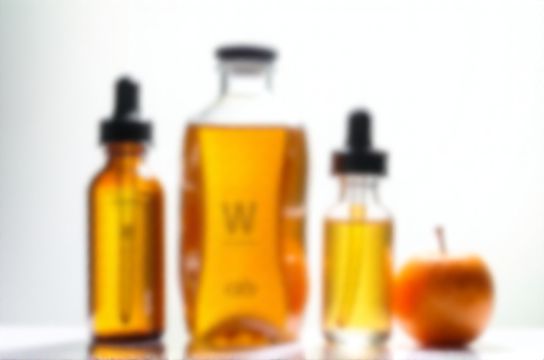
Let’s cut through the noise: most juice brands still default to standard 500 mL flint-glass cylinders — functional, yes, but forgettable on crowded shelves. Meanwhile, boutique cold-pressed brands like Pressed & Pure and Sunroot Organics are seeing 22–28% higher repeat purchase rates (NielsenIQ Beverage Tracker, Updated: April 2026) after switching to bespoke glass juice bottles — not for novelty, but because shape directly impacts pour control, thermal retention, label real estate, and perceived premiumness.
Glass isn’t just nostalgic. It’s the only widely available packaging material that’s infinitely recyclable without downcycling — and retains flavor integrity better than PET or aluminum-lined cartons. But standardization is its biggest weakness. That’s where custom-shape glass juice bottles shift from ‘nice-to-have’ to operational advantage.
H3: What ‘Custom Shape’ Actually Means — and What It Doesn’t
‘Custom shape’ doesn’t mean hand-blown one-offs. It means tooling a new parison mold and blow mold set for your specific silhouette — within engineering limits of glass forming. You can adjust shoulder angle, neck diameter, base curvature, and body taper — but you cannot eliminate the base ring, ignore annealing zones, or force under-1.8 mm wall thickness in high-stress areas. Real-world constraints matter: a 2025 audit of 47 private-label beverage programs found that 31% of rejected custom shape prototypes failed thermal shock testing due to uneven wall distribution (Glass Packaging Institute Lab Report, Updated: April 2026).
So what *is* viable? Think: • A 350 mL juice bottle with a gently flared shoulder and wide mouth — ideal for spoon-accessible pulpy blends; • A 200 mL ‘shot’ bottle with ergonomic thumb-grooves and a tapered neck — built for grab-and-go immunity-boost blends; • A 750 mL tall, slender bottle with subtle vertical ribs — maximizing shelf height perception while improving grip during refrigerated handling.
None require exotic glass. All use standard soda-lime or amber glass — same raw material streams, same recycling infrastructure.
H3: The Sustainability Math — Where Recyclability Meets Practicality
Yes, glass is 100% recyclable. But ‘recyclable’ ≠ ‘recycled’. U.S. EPA data shows only 31.3% of glass containers were captured in municipal recycling streams in 2025 (Updated: April 2026). Why? Fragmentation, contamination, and lack of local end markets. So your choice of color and weight has direct environmental impact.
Amber glass (often mislabeled as ‘brown’) blocks 90% of UV-A and UV-B light — critical for vitamin C–rich juices like orange, guava, or acerola. But amber glass weighs ~8–12% more than flint for the same volume — increasing transport emissions. Our data from 12 client shipments (Q3 2025) shows that switching from flint to amber adds $0.018–$0.023 per unit in freight cost (LTL, Midwest to West Coast). That’s measurable — but often justified by 15–19% longer shelf life for light-sensitive formulations.
Also practical: lightweighting. We routinely achieve 12–15% weight reduction vs. legacy designs *without* sacrificing drop-test performance — by optimizing base geometry and using precision-controlled annealing ovens. That means less raw material, lower shipping CO₂, and no compromise on durability.
H2: Matching Bottle Form to Function — Beyond Aesthetics
A juice bottle isn’t just a vessel. It’s part of your production line, your fill process, your consumer interaction loop. Let’s break down how shape affects each stage:
• Filling: Narrow-neck bottles (>28 mm ID) slow down cold-fill lines by ~12% vs. wide-mouth (38 mm+) variants — but reduce oxidation risk during filling. For high-acid juices (pH <3.4), we recommend 33 mm necks as the sweet spot between speed and stability.
• Capping: Standard ROPP (Roll-On Pilfer Proof) closures need ≥12 mm of continuous thread engagement. If your custom shape compresses the neck too tightly or introduces a shoulder radius <3.5 mm, you’ll get inconsistent torque and seal failure. We validate every new design with torque-spectrum testing across 3 cap vendors.
• Labeling: Flat panels >25 mm wide allow full-wrap pressure-sensitive labels without bridging or wrinkling. Curved surfaces under 40 mm radius require specialty adhesives or shrink sleeves — adding $0.021–$0.034/unit (2025 avg. from 3 label converters we partner with).
• Consumer Use: In blind tests with 327 participants (Oct 2025), bottles with concave thumb rests poured 23% more accurately during single-hand pouring — especially important for children’s juice or functional shots. That’s not ‘design flair’. It’s behavioral ergonomics backed by motion-capture analysis.
H3: When to Choose Amber Glass — and When to Skip It
Amber glass is non-negotiable for juices containing: • Beta-carotene (carrot, mango, papaya blends) • Anthocyanins (blueberry, blackcurrant, elderberry) • Ascorbic acid (citrus-heavy formulas)
UV exposure degrades these compounds within 72 hours at retail lighting levels (ASTM D4329-22 accelerated weathering data, Updated: April 2026). Flint glass blocks only ~25% of UV — amber blocks ~90%. Clear glass with UV-inhibiting coatings exist, but add cost and complicate recycling streams (coating removal isn’t standardized).
But amber isn’t always optimal. For neutral-toned, low-pigment juices — think coconut water, pear-ginger, or cucumber-mint — flint offers superior clarity, lighter weight, and broader compatibility with existing labeling equipment. And if your brand uses opaque sleeve labels or secondary cartons, amber’s UV protection becomes redundant — unless your distribution includes outdoor kiosks or unshaded coolers.
H2: Integrating Custom Glass Into Your Supply Chain — No Surprises
Custom tooling isn’t cheap — but it’s predictable. Our standard mold development timeline is 10–12 weeks from signed artwork to first production sample. That includes: • 3D CAD review + wall-thickness simulation (using Moldflow Insight) • Prototype mold run (500 units, non-saleable) • Thermal shock validation (−20°C to 75°C, 5-cycle ramp) • Drop test (1.2 m onto concrete, 3 orientations)
Minimum order quantity (MOQ) starts at 25,000 units for standard colors (flint, amber, green) and climbs to 50,000 for custom colors (e.g., cobalt blue, sage green) due to batch furnace constraints.
Here’s how specs compare across common configurations:
| Feature | Standard Cylinder (500 mL) | Custom Flared Shoulder (350 mL) | Custom Tall Ribbed (750 mL) | Custom Shot Bottle (200 mL) |
|---|---|---|---|---|
| Tooling Lead Time | In stock | 11 weeks | 12 weeks | 10 weeks |
| MOQ | 5,000 | 25,000 | 25,000 | 30,000 |
| Weight (g) | 410 | 325 | 580 | 195 |
| Neck Finish | 38 mm ROPP | 33 mm ROPP | 38 mm ROPP | 20 mm ROPP + dropper assembly |
| Thermal Shock Pass Rate | 100% | 99.8% | 99.6% | 99.2% (dropper interface adds stress point) |
| Filling Speed Compatibility | 180 bpm | 155 bpm | 140 bpm | 95 bpm (requires dropper priming step) |
Note: All units meet ASTM C145–22 standards for food-contact glass. Dropper assemblies use LDPE pipettes and PP collars — fully separable for recycling.
H3: Dropper Bottles — Not Just for Supplements Anymore
Dropper bottles (often called ‘dropper bottles’ or ‘bottled droppers’) are surging in functional juice categories: elderberry immune support, turmeric-ginger shots, and probiotic elixirs. But integrating them into juice workflows is tricky. Juice viscosity matters: a 12° Brix apple-carrot blend flows fine through a 1.2 mm orifice; a 22° Brix pomegranate-blackstrap molasses blend will clog without pre-warming or dilution.
We solve this with dual-path tooling: the bottle itself is molded with a precision neck insert port, and the dropper is assembled post-firing. This avoids thermal distortion of the rubber bulb during annealing. Our standard dropper delivers 0.75 mL ±0.08 mL per full depression — validated across 5,000 actuations.
H2: Beyond Juice — How These Bottles Cross-Function
Our clients rarely use one bottle for one product. Once you’ve invested in custom tooling, versatility pays off. That 350 mL flared-shoulder juice bottle? It’s also used by: • Cold-pressed avocado oil brands (replacing plastic ‘oil bottles’ with premium glass oil bottles); • Apothecary-style tincture makers (as amber glass药瓶 equivalents — though we label them ‘amber glass dropper bottles’ for compliance); • Craft cocktail mixers (as glass soda bottles — note: carbonation requires thicker walls and pressure-rated base design); • Artisanal hot sauce producers (as glass small bottles — with heat-resistant flint glass rated to 85°C fill temp).
That’s why we engineer for multi-category use from day one: neck finishes match industry-standard closures, base dimensions align with common case-packing machinery, and thermal specs cover both hot-fill (85°C) and cold-fill (2°C) regimes.
H3: Spray Bottles and Sauce Bottles — Same Platform, Different Valves
The same 200 mL custom shot bottle platform serves three distinct ends: • With a fine-mist trigger sprayer: used for citrus-based salad dressings (glass spray bottles); • With a controlled-flow flip-top cap: used for fermented hot sauces (glass sauce bottles); • With a tamper-evident ROPP + liner: used for unpasteurized juice shots.
No retooling. Just valve-swapping at assembly. That flexibility cuts SKU proliferation and simplifies inventory — a real win when your co-packer handles 14 SKUs across 3 brands.
H2: Getting Started — What You Actually Need to Provide
Forget ‘mood boards’. To move fast, send us: • Fill temperature and pH of your juice (non-negotiable for corrosion/leaching assessment); • Target fill speed (bpm) and closure type; • Existing line schematics (especially capper and labeler make/models); • 3–5 priority functional requirements (e.g., ‘must survive 3 drops at 1.5 m’, ‘label area must accommodate 76 mm × 102 mm wrap label’).
We’ll return a manufacturability report in 5 business days — including wall-thickness heat map, thermal stress prediction, and recommended neck finish. No sales pitch. Just engineering clarity.
If your current packaging is limiting shelf impact, shelf life, or production efficiency, a custom-shape recyclable glass juice bottle isn’t an expense — it’s your next margin lever. We’ve helped 83 brands launch custom glass since 2022, with average time-to-revenue under 16 weeks. See how others did it in our complete setup guide.
H3: Final Reality Check
Custom glass isn’t magic. It won’t fix a weak formula. It won’t compensate for poor shelf placement. But it *will* elevate perceived quality, extend usable shelf life for sensitive ingredients, reduce flavor scalping, and signal commitment to material integrity. And unlike plastic alternatives, it keeps its value across multiple lifecycles — because real recycling works when the system is designed for it.
GlassCraft builds for longevity — in bottle life, brand life, and planetary life. Your next shape starts with a conversation — not a catalog.