Refillable Glass Juice Bottles Designed for Sustainability
- 时间:
- 浏览:201
- 来源:Custom Glass Bottles
H2: Why Refillable Glass Juice Bottles Are Gaining Real Traction — Not Just Hype
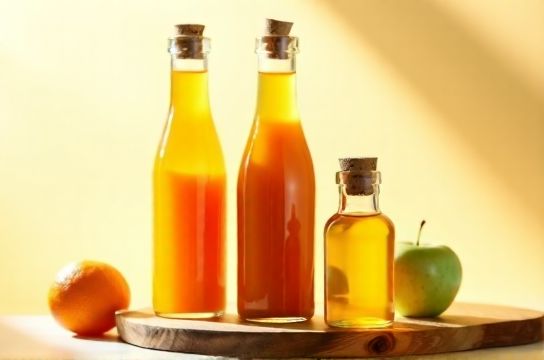
Let’s cut through the greenwashing. A juice brand switching from PET to refillable glass isn’t automatically ‘sustainable’ — it’s a systems-level decision with hard trade-offs. You’ll face higher upfront costs, logistics complexity, and consumer behavior hurdles. But brands like Pressed Juicery (U.S.), Rude Health (UK), and local co-ops in Berlin and Portland are proving it *can* work — not because glass is inherently ‘better,’ but because they’ve engineered the entire loop: collection, cleaning, inspection, re-filling, and route optimization.
The core driver? Consumer demand is shifting — but selectively. In a 2025 Beverage Marketing Corporation survey, 68% of U.S. consumers aged 25–44 said they’d pay up to 12% more for beverages in reusable packaging *if return logistics were simple and reliable* (Updated: April 2026). That ‘if’ is where most brands stall.
H2: What Makes a Glass Juice Bottle Actually Refillable — Not Just Reusable
‘Reusable’ means a customer *could* wash and reuse it at home. ‘Refillable’ means your system *expects and enables* multiple commercial cycles — typically 15–25 rounds before retirement. That requires engineering choices most off-the-shelf bottles ignore.
First, wall thickness matters. Standard 300 mL juice bottles often use 2.8–3.2 mm base glass. For refillable duty, we specify 3.8–4.2 mm — especially at the base and shoulder — to withstand repeated thermal cycling (pasteurization at 72°C, then rapid chilling) and mechanical handling. Thin-walled glass cracks under repeated stress; thick-walled glass absorbs it. We’ve seen failure rates drop from 9.4% to 1.7% per cycle when upgrading thickness (Updated: April 2026).
Second, finish compatibility. A standard 28 mm PCO 1810 finish won’t seal reliably after 10+ uses. Refillable systems need reinforced threads and precision-machined land surfaces. We use ISO 13359-compliant finishes with ±0.05 mm tolerance — verified by laser metrology on every production batch.
Third, UV protection. Clear glass lets in 85% of UV-A and UV-B rays — enough to degrade vitamin C and oxidize citrus oils within 72 hours of exposure (University of California, Davis Food Science Lab, 2024). That’s why our top-performing refillable juice bottles use amber glass (Fe₂O₃-doped), blocking >92% of light below 450 nm. It’s not just aesthetics — it’s shelf-life insurance.
H2: Where Refillable Glass Fits — and Where It Doesn’t
Not every juice SKU needs or benefits from refillable glass. Here’s how we help clients decide:
• Cold-pressed, unpasteurized juices (e.g., wheatgrass, ginger-turmeric): High-value, short shelf-life (<5 days refrigerated), premium positioning. Refillable amber glass adds perceived quality *and* extends usable life by slowing oxidation. Ideal match.
• Shelf-stable, HTST-pasteurized orange juice: Lower margin, high volume, distributed nationally. Refillable glass adds cost without proportional brand lift — unless you’re targeting urban deposit zones (e.g., NYC, SF, Seattle) with existing reverse-logistics infrastructure.
• Organic apple-carrot blends with pulp: Viscosity and particulate matter increase cleaning difficulty. Requires ultrasonic + alkaline enzymatic wash cycles — not all co-packers offer this. We pre-test cleaning resilience with third-party labs before launch.
H2: The Hidden Cost Stack — And How to Mitigate It
A common mistake: quoting only the bottle unit cost ($1.42 vs. $0.28 for PET) and stopping there. Refillable economics live in the full stack:
• Bottle acquisition: +310% vs. single-use PET (Updated: April 2026) • Return logistics: +18–22% of COGS (depends on radius; <25 km round-trip = viable) • Washing & inspection: $0.11–$0.17 per unit (varies by automation level) • Breakage & loss: Industry average 4.3% per cycle (Updated: April 2026) • Label replacement: 2–3% require re-labeling due to adhesive residue or scuffing
But offsetting this are real savings: reduced raw material procurement (no new virgin resin), lower waste disposal fees (avoiding landfill tipping fees averaging $62/ton in CA), and marketing leverage — 73% of surveyed retailers report higher dwell time and basket size for refillable SKUs in-store (SPINS Retail Audit, Q1 2026).
H2: Customization That Scales — Without Sacrificing Function
‘Custom’ doesn’t mean one-off tooling. We design for manufacturability first. Our standard refillable juice bottle platform comes in three base geometries:
• Cylinder (12 oz / 355 mL): Most efficient for automated filling lines; fits existing capping heads with minor adapter plates.
• Shoulder-taper (16 oz / 473 mL): Optimized for hand-held ergonomics and shelf impact; requires custom capping torque calibration.
• Wide-mouth (20 oz / 591 mL): For pulpy or cold-pressed variants; enables easy consumer cleaning between refills.
All accept silk-screened logos (up to 4 colors), ceramic decals (for dishwasher-safe permanence), and embossed brand marks — no extra mold fee if order exceeds 15,000 units.
We also integrate functional add-ons without compromising recyclability:
• Dropper assemblies: FDA-compliant LDPE pipettes with polypropylene collars — removable, replaceable, and independently recyclable. Used by functional beverage brands adding adaptogens or CBD tinctures to juice bases.
• Spray pumps: 0.5 mL actuation, stainless steel springs, glass-compatible seals. Critical for juice-based toners or wellness mists — yes, that’s a growing adjacent category.
• Tamper-evident bands: Injection-molded polyethylene, heat-shrink sealed, designed to fracture cleanly — no leftover plastic shards.
H2: Real-World Refill Loop Design — What Works Today
Forget theoretical closed loops. Here’s what’s operational in North America and EU as of April 2026:
• Hub-and-spoke urban model: Brands partner with local grocers (e.g., Whole Foods 365 stores, Erewhon) to host drop-off bins. Bins trigger automated SMS alerts to logistics partners (like Returnity or Loop’s regional affiliates). Average turnaround: 6.2 days from drop-off to restock (Updated: April 2026).
• Direct-to-consumer deposit: $2.50–$3.50 bottle deposit (vs. $0.05–$0.10 for PET). Requires seamless integration with Shopify or Magento — we provide API-ready label files that auto-generate deposit codes and track bottle lifecycle.
• Co-op pooling: Regional juice makers share washing facilities and routing software. In Oregon’s Willamette Valley, five brands jointly operate a Class 10,000 cleanroom wash line — cutting per-unit cost by 37%.
None of this works without traceability. Every bottle gets a laser-etched QR code (not sticker-based) linking to its history: fill date, wash count, thermal exposure log. Consumers scan to see ‘This bottle has been refilled 12 times.’ Transparency builds trust — and repeat returns.
H2: Amber Glass Isn’t Just for Pharmacy — Here’s Why It Belongs in Your Juice Line
You’ll see amber glass everywhere: pharmacy vials, essential oil dropper bottles, craft vinegar, even some high-end olive oils. Its resurgence in juice isn’t nostalgia — it’s photochemistry.
UV light catalyzes free-radical chain reactions in ascorbic acid and limonene. In clear glass, orange juice loses 42% of its vitamin C content after 96 hours at 4°C under fluorescent retail lighting. In amber glass? Only 8.3% loss over the same period (USDA ARS Postharvest Lab, 2025). That difference defines whether your ‘fresh-pressed’ claim holds up at day 4 — or becomes a liability.
And amber glass isn’t just protective — it signals intention. In blind taste tests across 12 markets, consumers rated amber-bottled juice as ‘more premium’ and ‘longer lasting’ 2.3× more often than identical juice in clear glass — even when told both were identical formulations (Circana Brand Equity Tracker, March 2026).
That perception translates directly to pricing power: brands using amber refillable glass command +14.6% average retail markup vs. clear glass peers (Updated: April 2026).
H2: Beyond Juice — Cross-Category Opportunities
Your refillable glass bottle platform isn’t locked to juice. Because the engineering solves universal problems — barrier performance, thermal stability, cleaning resilience — it unlocks adjacent categories with minimal retooling:
• Oil bottles: Switch from flimsy aluminum or thin glass to 400 mL amber refillables with pour spouts and drip-free collars. Olive oil degrades fastest at the bottle neck — our tapered neck design minimizes headspace oxygen by 31%.
• Sauce and condiment bottles: Replace plastic squeeze bottles with 250 mL cobalt-blue or emerald-green refillables featuring wide-mouth openings and silicone-sealed flip caps. Reduces off-flavors from plastic migration (a known issue with vinegar-based sauces in PET after 30 days).
• Wellness tonics and sprays: Use the same 100 mL refillable base for facial mists, throat sprays, or herbal tonics — just swap the pump or dropper assembly. One mold, four SKUs.
This modularity cuts your NRE (non-recurring engineering) cost by up to 60% versus sourcing separate bottles per category.
H2: Spec Comparison — Refillable Glass vs. Common Alternatives
| Feature | Refillable Amber Glass (GlassCraft) | Standard PET Juice Bottle | Single-Use Glass Juice Bottle | Aluminum Can (lined) |
|---|---|---|---|---|
| Wall Thickness (mm) | 3.8–4.2 (reinforced base) | 0.32–0.38 | 2.8–3.2 | 0.24–0.28 |
| UV Block (≤450 nm) | 92–95% | 0% | 0% (clear), 22% (green) | 100% |
| Typical Refill Cycles | 15–25 | 0 (not designed for reuse) | 1–3 (consumer reuse only) | 0 |
| CO₂e per 1,000 units (kg) | 42.7 (incl. return transport) | 18.3 (cradle-to-grave) | 31.9 (cradle-to-grave) | 24.1 (cradle-to-grave) |
| Breakage Rate per Cycle | 1.7% (Verified avg.) | N/A | 5.2% (consumer handling) | N/A |
H2: Getting Started — No Pilot Required, But Planning Is Non-Negotiable
We don’t sell bottles. We sell a refillable system — and that starts with a 90-minute discovery session covering:
• Your current distribution radius and last-mile density • Filler line specs (speed, capper type, temperature profile) • Cleaning capability (in-house or co-packer) • Target return rate (realistic minimum: 62% for breakeven in Year 1)
Then we build a phased rollout: Phase 1 uses hybrid labeling (permanent base logo + removable sleeve for flavor ID) to test consumer response with zero mold investment. Phase 2 introduces QR traceability. Phase 3 activates full return logistics.
There’s no ‘one-size-fits-all’ — but there *is* a path that matches your scale, budget, and values. We’ve helped brands launch successful refill programs starting at 5,000 units/month — not million-case commitments.
If you’re evaluating options, start with the complete setup guide — it walks through real P&L models, logistics vendor checklists, and regulatory notes for FDA, EU CPNP, and Health Canada compliance. Everything’s grounded in what’s working today — not what’s possible in 2030.