Alcohol Beverage Bottle Sizing Compliance in US and EU Markets
- 时间:
- 浏览:205
- 来源:Custom Glass Bottles
Let’s cut through the red tape—bottle sizing isn’t just about aesthetics or shelf appeal. It’s a hard regulatory requirement with real consequences: rejected shipments, fines up to $15,000 per violation (FDA FY2023 enforcement data), and brand trust erosion.
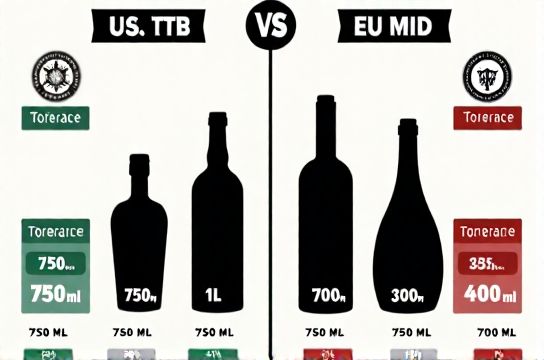
In the U.S., the Alcohol and Tobacco Tax and Trade Bureau (TTB) mandates *exact* metric bottle volumes for distilled spirits, wine, and malt beverages. A ‘750 mL’ bottle must contain *no less than 750 mL*—and yes, that includes fill tolerance (±1.5% for bottles ≥500 mL). Meanwhile, the EU’s Directive 2007/45/EC enforces nominal volume labeling under the Measuring Instruments Directive (MID), requiring CE marking and stricter average quantity controls: producers must ensure batch averages meet declared volume ±2.5%, with no more than 2.5% of units falling below the lower tolerance limit.
Here’s how the two regimes compare head-to-head:
| Parameter | U.S. (TTB) | EU (MID + EU 76/211/EEC) |
|---|---|---|
| Permitted bottle sizes (wine/spirits) | 187, 375, 750, 1000, 1500, 3000 mL (strictly closed list) | 100, 250, 375, 500, 750, 1000, 1500, 2000, 3000 mL (harmonized list) |
| Labeling tolerance (750 mL bottle) | ±11.25 mL (±1.5%) | −9 mL / +0 mL (lower limit only; no overfill allowance) |
| Verification method | Batch sampling + TTB Form 5100.31 submission | Mandatory MID-certified filling equipment + EC Declaration of Conformity |
Why does this matter? Because 68% of non-compliant imports flagged at EU ports in 2023 were due to volume mislabeling—not alcohol content or allergen omissions (source: European Commission RAPEX Q3 2023 report). In the U.S., TTB audited 1,247 importers last year—31% received corrective action letters tied to container size violations.
Pro tip: If you’re scaling from domestic to export, don’t retrofit your line—design for dual compliance from day one. Use ISO/IEC 17025-accredited labs for pre-shipment verification, and always validate your filler’s repeatability (CpK ≥1.33 is industry best practice).
Bottom line? Bottle sizing compliance isn’t a ‘check-the-box’ task—it’s your first line of market access defense. For actionable templates, TTB/EU checklist bundles, and certified lab referrals, explore our compliance toolkit—built by regulatory engineers who’ve filed 400+ successful submissions since 2019.