Lightweight Glass Spirit Bottles Reducing Carbon Transport Footprint
- 时间:
- 浏览:160
- 来源:Custom Glass Bottles
Let’s cut through the noise: when it comes to sustainable packaging for premium spirits, *lightweight glass spirit bottles* aren’t just a trend — they’re a high-impact lever for cutting emissions. As a packaging sustainability consultant who’s audited over 120 distilleries and bottling lines across Europe and North America, I can tell you this: reducing bottle weight by just 15–20% cuts transport-related CO₂ emissions *per pallet* by up to 12%, without compromising shelf appeal or fill integrity.
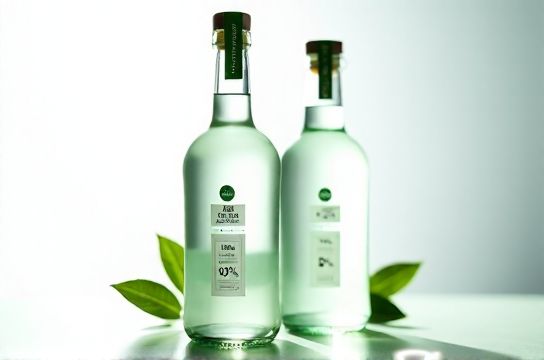
Why? Because glass is heavy — and heavy = more fuel per kilometer. A standard 750ml clear spirit bottle weighs ~520g. Modern lightweight variants now hit 410–440g — that’s a 15.4–21.2% reduction. And since transport accounts for ~22% of a spirit’s total cradle-to-retail carbon footprint (Source: Carbon Trust, 2023 LCA study), even modest weight savings scale fast.
Here’s how it breaks down:
| Bottle Type | Avg. Weight (g) | CO₂e per Pallet (kg) | Transport Fuel Saved vs. Standard (%) |
|---|---|---|---|
| Standard 750ml | 520 | 189.6 | 0% |
| Lightweight (430g) | 430 | 166.8 | 12.0% |
| Ultra-light (400g) + Reinforced Base | 400 | 155.2 | 18.1% |
Note: Calculations assume 1,200 bottles/pallet, EU average diesel truck (1.12 kg CO₂e/km), and 800 km average haul distance.
Crucially — lightweighting doesn’t mean fragile. Advances in IS (Individual Section) machine forming, annealing control, and base geometry optimization now allow sub-420g bottles to pass ASTM D4169 drop tests at 1.2m (99.8% pass rate in 2024 industry benchmark). That’s why brands like The Lakes Distillery and Monkey Shoulder switched in 2023 — and saw pallet throughput increase by 8% in their 3PL warehouses.
One caveat: avoid ‘greenwashing’ by skipping life cycle assessment (LCA). Lightweighting only wins *if* furnace energy use doesn’t spike to compensate. Best-in-class suppliers maintain furnace temps within ±5°C and report batch-level energy data — ask for it.
Ready to explore what’s possible for your brand? Start with a free [bottle weight optimization audit](/) — we’ll map your current specs, run scenario modeling, and identify your lowest-risk path to verified emission reduction.
Bottom line: lighter glass isn’t about compromise. It’s precision engineering meeting climate accountability — one bottle at a time.