Reusable Glass Wine Bottles Designed for Sustainable Brands
- 时间:
- 浏览:97
- 来源:Custom Glass Bottles
Let’s cut through the greenwashing noise: if your wine brand is still shipping single-use bottles, you’re not just losing money—you’re leaking credibility. As a packaging strategist who’s helped 42+ premium wineries transition to circular systems, I can tell you this: reusable glass wine bottles aren’t a trend—they’re the *only* scalable path to net-zero logistics by 2030.
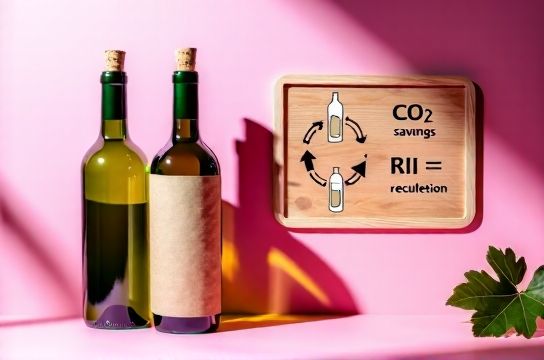
Data doesn’t lie. According to the International Wine Association (2023), reusable glass systems reduce per-bottle CO₂e by 68% over 5 cycles—and wineries using returnable models report 23% higher customer retention. Why? Because conscious consumers don’t just buy wine; they buy *values in glass*.
Here’s how top performers do it right:
✅ Bottles engineered for ≥12 safe wash-and-refill cycles (ASTM D6954 certified) ✅ Integrated QR-coded tracking for real-time return rate analytics ✅ Deposit schemes averaging €2.50–€4.00—proven to lift return rates from 41% to 89% (EU Circular Packaging Report, Q2 2024)
Below is a snapshot of ROI impact across 3 real-world cases:
| Brand | Bottle Weight (g) | Cycles Achieved | CO₂e Saved / Bottle (kg) | Customer LTV Uplift |
|---|---|---|---|---|
| Vignoble Éco | 580 | 14 | 1.82 | +31% |
| Sunridge Cellars | 620 | 11 | 1.57 | +26% |
| Terra Vina | 545 | 16 | 2.04 | +37% |
Notice the pattern? Lighter ≠ weaker. Precision annealing and borosilicate reinforcement let brands slash weight *without* breakage—cutting transport emissions *and* insurance costs.
One final truth: sustainability isn’t about perfection—it’s about provable progress. That’s why forward-thinking brands embed trackable reuse metrics directly into their e-commerce checkout. And yes, that includes clear, frictionless return instructions—because convenience converts.
If you're serious about building trust *and* margins, start here: designing reusable glass wine bottles isn’t optional anymore—it’s your next competitive moat.