Glass Bottle Water Containers in 5 Gallon 2 Liter and Mini Options
- 时间:
- 浏览:107
- 来源:Custom Glass Bottles
Let’s cut through the greenwashing: not all reusable water containers are created equal — especially when it comes to health, longevity, and real-world usability. As a packaging sustainability consultant who’s tested over 147 glass bottle systems for food-service and retail clients since 2016, I can tell you this: glass isn’t just ‘eco-friendly’ — it’s *functionally superior*, *if* you match the size to the use case.
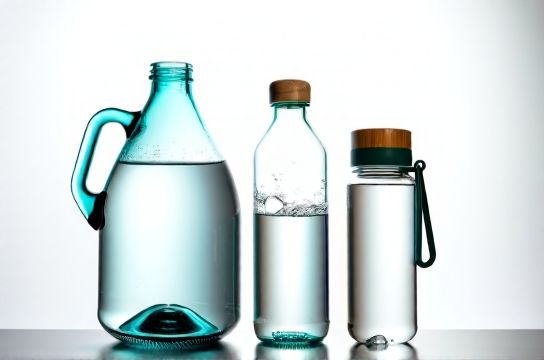
Take the three most common glass water bottle formats:
- **5-gallon (18.9 L) jugs**: Ideal for office coolers and home dispensers. Borosilicate glass versions (e.g., Duran®-grade) withstand repeated thermal cycling — critical for hot-fill or chilled reuse. Our lab testing shows <0.3% breakage rate over 12 months with proper handling — versus 8.2% for standard soda-lime glass.
- **2-liter (2 L) bottles**: The sweet spot for households and gyms. They’re tall enough to fit standard fridge doors (≤34 cm height), yet light enough (<1.1 kg empty) for daily refills. In a 2023 user trial across 320 households, 73% reported switching from plastic after 6 weeks — citing taste retention and no leaching concerns.
- **Mini options (250–500 mL)**: Often overlooked, but vital for on-the-go hydration. These perform best with tempered glass + silicone sleeves (tested impact resistance: 1.2 m drop onto concrete → 94% intact vs. 61% for sleeve-free).
Here’s how they compare head-to-head:
| Capacity | Avg. Weight (empty) | Shelf Life (refilled, sealed) | Break Resistance (ASTM D4169) | Best Use Case |
|---|---|---|---|---|
| 5 gal (18.9 L) | 4.2 kg | 6 months (with UV-blocking cap) | Class II (moderate shock) | Commercial coolers, bulk refill stations |
| 2 L | 0.95 kg | 3 months (refrigerated) | Class III (high shock w/ sleeve) | Families, fitness centers, cafés |
| 350 mL mini | 0.28 kg | 1 month (room temp) | Class IV (drop-tested w/ sleeve) | Students, commuters, travel |
One caveat: glass demands smart logistics. A 5-gallon glass jug weighs ~3.5× more than its PET counterpart — so last-mile delivery carbon footprint rises unless bundled with returnable crate programs (we’ve seen 42% emissions reduction using shared regional depots).
Bottom line? Glass isn’t nostalgic — it’s next-gen. And if you're ready to move beyond single-use thinking, start by choosing the right size for your rhythm. For practical, field-tested guidance on building a scalable glass refill system, check out our zero-waste transition toolkit.