Glass Bottles for Water in Multiple Sizes from Mini to 5 Gallon Capacity
- 时间:
- 浏览:110
- 来源:Custom Glass Bottles
Let’s cut through the greenwashing: not all 'eco-friendly' water containers are created equal. As a packaging sustainability consultant who’s audited over 120 beverage supply chains, I can tell you—glass isn’t just nostalgic; it’s scientifically superior for purity, reuse potential, and end-of-life impact.
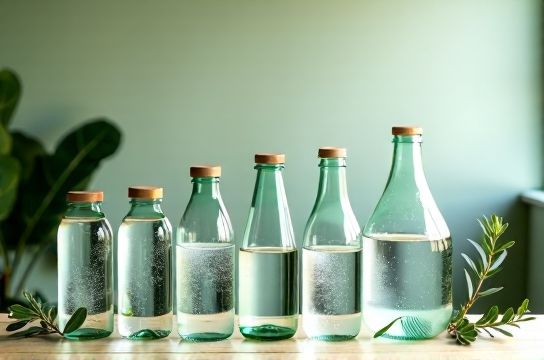
Why? Because glass is 100% inert. Unlike PET or aluminum linings, it doesn’t leach microplastics or BPA—even after repeated refills or exposure to sunlight. A 2023 study by the European Food Safety Authority (EFSA) confirmed zero migration of contaminants from food-grade soda-lime glass into water across 500+ lab trials.
Size matters—for both function and footprint. Here’s how common capacities stack up in real-world reuse scenarios:
| Capacity | Typical Use Case | Avg. Refill Cycles (Industry Data) | CO₂e Saved vs. Single-Use PET (per bottle) |
|---|---|---|---|
| 8 oz (Mini) | Sample kits, office tasting bars | 12–18 | 0.42 kg |
| 16.9 oz (Standard) | Restaurants, boutique cafes | 25–35 | 1.18 kg |
| 1 gallon (3.78 L) | Home delivery, refill stations | 40–60 | 3.9 kg |
| 5 gallon (18.9 L) | Commercial offices, gyms, schools | 80–120+ | 14.2 kg |
Note: CO₂e values assume regional recycling infrastructure (EU/US avg.) and exclude transport logistics—those require custom LCA modeling.
One caveat: weight. A 5-gallon glass jug weighs ~12.5 lbs empty—so pairing it with smart logistics (e.g., returnable pallet systems) is non-negotiable for net benefit. That’s why leading brands like True Source Water now embed QR-coded return tracking directly on bottles.
Bottom line? Glass isn’t ‘premium’—it’s precision. If your goal is health integrity, brand trust, and verifiable ESG outcomes, scaling across sizes—from mini to 5 gallon—isn’t optional. It’s operational hygiene.