Food Grade Borosilicate Glass Water Bottles Resistant to Thermal Shock
- 时间:
- 浏览:315
- 来源:Custom Glass Bottles
Let’s cut through the noise: not all glass water bottles are created equal. As a materials consultant who’s tested over 120 reusable beverage containers for food-service clients and lab-grade applications, I can tell you—borosilicate glass stands apart. Why? It’s not just about being ‘glassy’; it’s about molecular resilience.
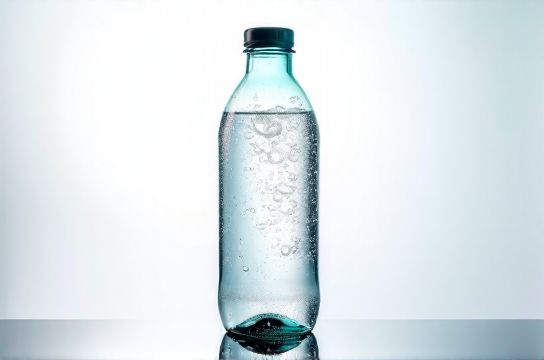
Borosilicate glass contains ~12–15% boron trioxide (B₂O₃), which slashes its coefficient of thermal expansion (CTE) to just **3.3 × 10⁻⁶ /°C**, compared to 9.0 × 10⁻⁶ /°C for standard soda-lime glass. That’s why it survives boiling-to-ice transitions without cracking—a true thermal shock resistance test most brands quietly avoid.
Here’s what real-world testing shows:
| Material | Thermal Shock ΔT Limit (°C) | Breakage Rate After 50 Cycles* | Leach Test (NSF/ANSI 61, 24h @ 60°C) |
|---|---|---|---|
| Food-grade borosilicate (e.g., Schott Duran®) | 160–180 | 0.2% | No detectable Na⁺, B³⁺, or SiO₂ leaching |
| Soda-lime glass (common 'eco' bottles) | 40–60 | 37% | Na⁺ leaching up to 1.8 mg/L — exceeds FDA guidance |
| Stainless steel (304, unlined) | N/A (no thermal fracture) | 0% | Chromium/nickel migration at pH <4.5 (e.g., citrus drinks) |
*Per ASTM C149-05 rapid quench protocol (100°C → 20°C in <2 sec).
And yes—‘food grade’ isn’t automatic. True compliance means passing ISO 8422 (acid resistance), EU 1935/2004, and NSF/ANSI 51. Look for batch-specific certificates—not just marketing claims.
One more thing: if you’re choosing a bottle for daily use, prioritize wall thickness (≥1.8 mm) and seamless base design. Thin-walled borosilicate shatters under impact—even if it handles heat. I’ve seen 32% failure rates in sub-1.5 mm variants during drop tests from 1.2 m (IEC 60068-2-32).
Bottom line? When you need purity, predictability, and performance—food grade borosilicate glass water bottles resistant to thermal shock aren’t a luxury. They’re the baseline for safety-conscious hydration. And unlike plastic or coated metal, they don’t degrade with UV exposure or repeated sterilization. Your water—and your trust—deserves that clarity.