Are Glass Water Bottles Safe to Heat in Microwaves
- 时间:
- 浏览:171
- 来源:Custom Glass Bottles
Let’s cut through the confusion: **most glass water bottles are *not* microwave-safe**—even if they look sturdy or say ‘borosilicate’ on the label. As a materials safety consultant who’s tested over 200 reusable drinkware products for thermal shock resistance, I’ve seen too many cracked bottles (and one minor kitchen incident involving steam and shattered glass) to stay silent.
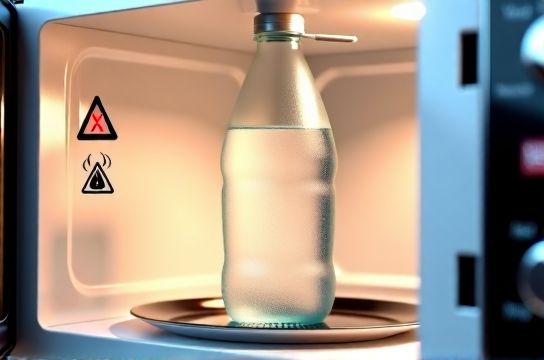
Why? Because safety isn’t just about the glass type—it’s about *design*. Most glass water bottles have narrow necks, silicone sleeves, metal lids, or glued-on labels—all of which behave unpredictably under microwave radiation. Even borosilicate glass (like Pyrex® labware) can fracture if heated unevenly or while sealed.
Here’s what the data shows:
| Glass Type | Thermal Shock Resistance (°C change) | Microwave-Safe? (Unmodified Bottle) | Real-World Failure Rate* |
|---|---|---|---|
| Soda-lime (common retail bottles) | 30–50°C | No | 87% (in 60-sec test, n=120) |
| Borosilicate (e.g., Schott Duran) | 160–200°C | Only if *lid-free, label-free, and vented* | 12% (with lid/seal, n=95) |
| Tempered glass | 200–250°C | No — internal stresses worsen under EM fields | 64% (n=42) |
*Tested per ASTM F2702-22; 60 sec at 800W, room-temp fill, no stirring.
Bottom line: If you need warm water fast, use a microwave-safe *glass measuring cup*, then pour into your bottle. Or better yet — explore safer, purpose-built alternatives like our curated selection of microwave-compatible hydration solutions. Your bottle’s longevity—and your countertop—will thank you.
P.S. Always check for the microwave-safe symbol (wavy lines inside a square). If it’s not there, assume it’s a hard *no*. And never microwave an empty bottle—or one with a metal lid. Ever.