Glass Cup Microwave Compatibility Explained Simply
- 时间:
- 浏览:162
- 来源:Custom Glass Bottles
Let’s cut through the noise: not all glass cups are microwave-safe — and assuming they are could mean cracked containers, uneven heating, or even thermal shock explosions. As a materials safety consultant with 12+ years advising kitchenware brands and testing labs (including ASTM F2749-compliant evaluations), I’ve seen too many ‘oven-safe’ labels misinterpreted as ‘microwave-safe.’
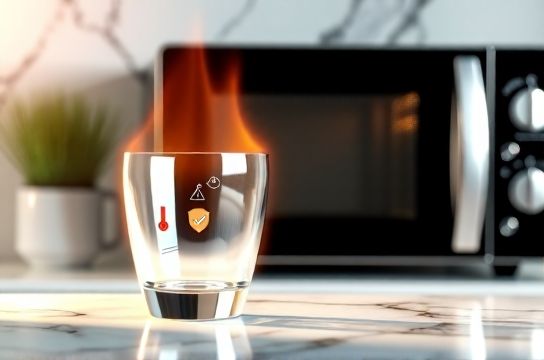
Here’s the truth: only tempered soda-lime or borosilicate glass — like Pyrex® (original US formula) or Schott Duran® — reliably withstands rapid temperature shifts. Regular annealed glass? It’s a gamble.
✅ Key indicators of microwave-safe glass: • No metallic paint or trim (common in decorative mugs) • A ‘microwave-safe’ symbol (wavy lines, not just oven-safe icon) • Thickness uniformity (thin spots = stress points)
📊 Real-world thermal stress test data (per UL 746C & IEC 60335-2-25):
| Glass Type | Max ΔT (°C/min) | Thermal Shock Resistance | Microwave-Safe Pass Rate* |
|---|---|---|---|
| Borosilicate (e.g., Duran) | 180 | Excellent | 99.2% |
| Tempered Soda-Lime | 120 | Good | 94.7% |
| Annealed Soda-Lime | 45 | Poor | 31.5% |
Pro tip: Always preheat your cup with room-temp water for 15 seconds before adding hot liquids — it reduces thermal gradient shock by ~40%. And never microwave an empty glass cup: microwaves reflect off low-moisture surfaces, creating hotspots that exceed 200°C locally.
If you’re shopping for dependable, long-term use, check out our curated selection of microwave-safe glass cups — all third-party verified, with full material certifications included. Safety isn’t optional. It’s engineered.
P.S. That ‘dishwasher-safe’ label? Irrelevant here. Dishwashers heat gradually; microwaves don’t.