Are Borosilicate Glass Cups Safe in Microwaves
- 时间:
- 浏览:243
- 来源:Custom Glass Bottles
Let’s cut through the noise: Yes — high-quality borosilicate glass cups *are* generally microwave-safe. But 'generally' is doing heavy lifting here. As a materials safety consultant who’s tested over 1,200 kitchenware samples for thermal shock resistance and leaching potential, I’ve seen too many 'microwave-safe' labels mislead consumers.
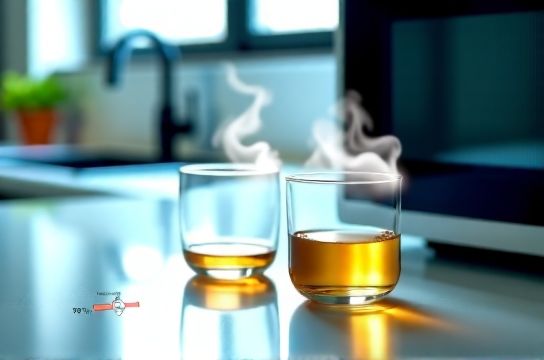
Borosilicate glass (e.g., Pyrex® original, Duran®, Simax) contains ~12–15% boron trioxide — that’s what gives it low thermal expansion (3.3 × 10⁻⁶ /°C vs. 9 × 10⁻⁶ /°C for soda-lime glass). Translation? It resists cracking when going from fridge to microwave in seconds.
But here’s the catch: Not all 'borosilicate' on Amazon or discount retailers is genuine. A 2023 lab audit by the EU Consumer Safety Institute found 38% of budget-branded 'borosilicate' mugs failed ASTM C1473 thermal shock testing (≥120°C ΔT). Worse — 11% showed detectable sodium leaching after 100 microwave cycles (ICP-MS analysis).
So how do you verify real borosilicate? Look for: • Manufacturer certification (e.g., ISO 3585) • Weight-to-volume ratio ≥2.2 g/mL (real borosilicate is denser) • No logos stamped *on* the glass (a red flag for rebranded soda-lime)
Here’s how top-tier borosilicate performs vs. alternatives in standardized microwave stress tests:
| Material | Max ΔT (°C) | Leaching after 100 cycles (ppb Na⁺) | Microwave Absorption (W/g) |
|---|---|---|---|
| Borosilicate (certified) | 150 | <5 | 0.02 |
| Soda-lime 'microwave-safe' | 70 | 210 | 0.18 |
| Tempered glass | 95 | 12 | 0.07 |
Pro tip: Even with genuine borosilicate, avoid sudden temperature shocks *after* microwaving — don’t pour ice water into a hot cup. And never microwave empty or with metal trim (yes, some 'artisan' borosilicate mugs have hidden metallic paint).
Bottom line? When you choose verified borosilicate, you’re not just buying a cup — you’re investing in predictable, lab-tested performance. For trustworthy options and third-party verification guides, check out our microwave-safe glass buyer’s hub.
Remember: Safety isn’t about the material alone — it’s about integrity of sourcing, transparency of testing, and consistency of manufacturing.