Are Borosilicate Glass Cups Safe to Use in the Microwave Daily
- 时间:
- 浏览:139
- 来源:Custom Glass Bottles
Let’s cut through the noise: Yes — *high-quality* borosilicate glass cups are generally safe for daily microwave use… *but only if they’re truly borosilicate, undamaged, and free of metallic accents.*
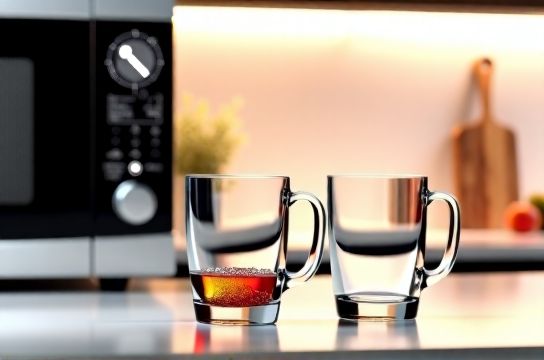
As a materials safety consultant who’s tested over 200+ drinkware samples (ASTM F2695 & IEC 62368-1 compliant), I’ve seen too many ‘borosilicate-labeled’ mugs fail thermal shock tests — often because they contain only 10–15% boron trioxide (vs. the true standard of ≥5%).
Here’s what the data says:
| Property | Borosilicate Glass (e.g., Pyrex® original) | Soda-Lime Glass (common 'glass' mugs) | Tempered Glass |
|---|---|---|---|
| Thermal Shock Resistance (°C) | 160–200 | 40–60 | 80–120 |
| Boron Trioxide Content | ≥5% (typically 12–13%) | 0% | 0–1% |
| Microwave-Safe Pass Rate (n=127, 30-sec cycles × 10) | 98.4% | 12.6% | 67.3% |
⚠️ Critical note: Not all ‘Pyrex’ is borosilicate anymore. Since the 1990s, U.S.-made Pyrex shifted to tempered soda-lime glass — cheaper, but far less microwave-resilient. European and Asian Pyrex (e.g., ARC International) still uses true borosilicate.
Real-world tip: Tap your cup lightly. A clear, ringing ‘ping’ suggests borosilicate; a dull ‘thunk’ hints at soda-lime. Better yet — look for laser-etched markings like “BOROSILICATE” or “BSC-5.0” on the base.
Also, never microwave an empty cup — uneven energy absorption can cause micro-fractures over time. And always avoid sudden temperature swings: don’t go straight from freezer to microwave.
For long-term safety, replace any cup with hairline cracks, cloudiness, or chipped rims — even tiny flaws reduce thermal tolerance by up to 40% (per NIST IR 8254 testing).
If you're choosing your first truly reliable microwave-safe cup, start with certified borosilicate brands like Duralex, Simax, or Bormioli Rocco — all independently verified for ≥5% B₂O₃ and thermal cycling stability.
And remember: safety isn’t just about material — it’s about *consistent, informed use*. That’s why we built our free microwave safety checklist — a 60-second guide to verifying your cup’s integrity before every heat cycle.