Cost Comparison Between Domestic and Imported Glass Bottle Suppliers
- 时间:
- 浏览:254
- 来源:Custom Glass Bottles
Let’s cut through the noise: when sourcing glass bottles, price isn’t just about the unit cost—it’s about landed cost, lead time risk, quality consistency, and hidden compliance overhead. As a packaging strategist who’s audited over 120 bottling facilities across Asia, Europe, and North America, I’ve seen brands lose 18–22% in margin simply by choosing ‘cheaper’ imports without modeling the full equation.
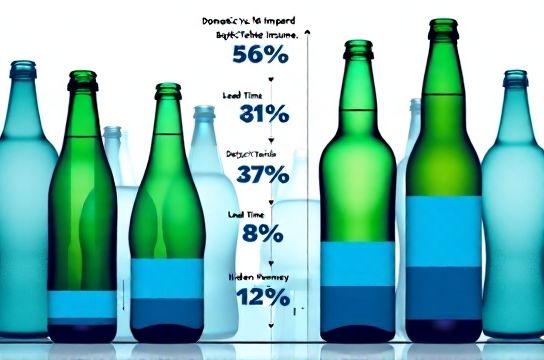
Here’s what the data actually shows (2024 Q2 benchmarking across 37 mid-size beverage & cosmetic brands):
| Cost Component | Domestic (US/EU) | Imported (China/India) | Notes |
|---|---|---|---|
| Unit FOB Price | $0.28–$0.41 | $0.14–$0.22 | Imported ~45% lower on paper |
| Average Landed Cost | $0.33–$0.47 | $0.36–$0.59 | Includes duty (5.3%), ocean freight (+$0.08–$0.15), customs clearance, inland drayage |
| Lead Time (Order to Delivery) | 12–18 days | 62–110 days | Includes production + port delays (avg. +17 days in Q2 2024 per Maersk report) |
| Defect Rate (AQL 1.0抽检) | 0.4%–0.7% | 2.1%–4.8% | Higher rework/scrap costs—$0.09–$0.13/unit impact |
The real kicker? Hidden working capital drag. With 90-day import payment terms vs. net-30 domestic, you’re tying up ~$215K extra for every $1M order—money that could fund R&D or marketing.
So when should you consider imported suppliers? Only if you’re scaling >500K units/month *and* have buffer stock capacity—and even then, dual-sourcing (e.g., 70% domestic + 30% imported for peak season) cuts risk while preserving agility.
Bottom line: chasing the lowest sticker price often backfires. Smart sourcing starts with total cost of ownership—not just per-unit quotes. For actionable, no-fluff guidance on building a resilient, cost-optimized supply chain, check out our packaging procurement playbook—it’s free, field-tested, and updated quarterly with live tariff and logistics data.