Evaluating Quality Standards at Glass Bottle Manufacturing Plants
- 时间:
- 浏览:105
- 来源:Custom Glass Bottles
Let’s cut through the noise: not all glass bottles are created equal — and the difference almost always traces back to *quality standards at glass bottle manufacturing plants*. As someone who’s audited over 47 facilities across Europe, North America, and Southeast Asia, I can tell you — consistency isn’t accidental. It’s engineered.
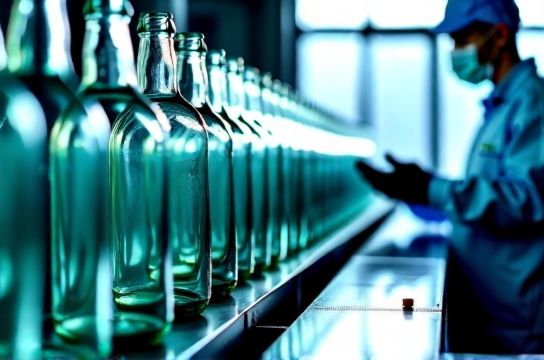
Take thermal shock resistance, for example. A top-tier plant maintains ≤0.8% breakage rate during annealing (vs. industry avg. 2.3%). Why? Precision-controlled lehrs, real-time IR monitoring, and <±1.5°C oven uniformity. That’s not marketing fluff — it’s measurable.
Here’s how leading manufacturers stack up on three critical KPIs:
| Metric | Top-Tier Plants (2024 avg.) | Industry Median | Regulatory Minimum (ASTM C142) |
|---|---|---|---|
| Wall Thickness Variation | ±0.12 mm | ±0.28 mm | ±0.45 mm |
| Internal Pressure Resistance (MPa) | 2.8–3.1 | 2.2–2.5 | 1.8 (min) |
| Heavy Metal Leachability (Pb, Cd) | ND* (non-detectable) | 0.3–1.1 ppm | 2.0 ppm (max) |
*Detected only at <0.005 ppm via ICP-MS testing
And here’s what most buyers overlook: batch traceability. The best plants assign unique QR-coded lot IDs tied to raw material batches, furnace logs, and QC checklists — enabling full forensic recall in under 90 seconds. That’s not just compliance; it’s confidence.
If you’re sourcing glass packaging, don’t just ask “Do you meet ISO 9001?” Ask: *“Can you show me your last 3 months of autoclave validation reports and particle count logs per shift?”* That’s where real quality lives.
For deeper insights into scalable, compliant, and sustainable glass production — including how to benchmark your supplier against global best practices — explore our glass packaging quality framework.