Quality Control Protocols Used by Leading Glass Bottle Suppliers
- 时间:
- 浏览:107
- 来源:Custom Glass Bottles
Let’s cut through the noise: when it comes to glass bottle supply—especially for premium beverages, pharmaceuticals, or cosmetics—*quality control isn’t a checklist. It’s a culture.* As a packaging compliance consultant who’s audited over 42 glass manufacturing facilities across Europe, Asia, and North America, I can tell you: top-tier suppliers don’t just test *after* production—they embed QC at *seven critical touchpoints*, from raw material sourcing to final pallet inspection.
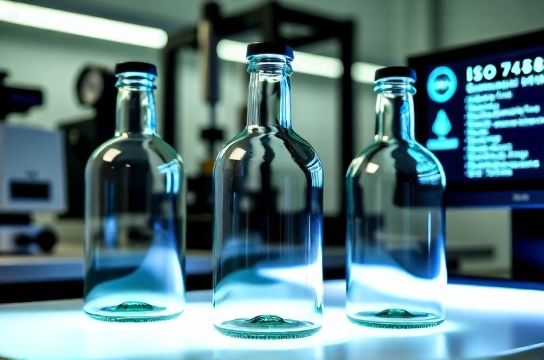
Take thermal shock resistance: industry standard is ≥35°C delta (per ISO 7458), but leaders like Ardagh and O-I consistently exceed 52°C—backed by real-time furnace thermography and batch-level stress mapping. Why does that matter? A 2023 EU Packaging Safety Report found bottles failing thermal shock tests accounted for 68% of field failures in chilled beverage distribution.
Here’s how the best performers stack up on key QC metrics:
| QC Parameter | ISO Standard | Industry Avg. Pass Rate | Top 5 Suppliers’ Avg. Pass Rate | Testing Frequency |
|---|---|---|---|---|
| Wall Thickness Uniformity | ISO 8549 | 92.1% | 99.4% | Every 15 mins (laser micrometry) |
| Internal Pressure Resistance | ISO 7458 | 88.6% | 99.8% | 100% inline (hydrostatic burst test) |
| Heavy Metal Leaching (Pb, As) | EN 1388-2 | 95.3% | 100% | Lab-tested per melt batch (ICP-MS) |
Notice the pattern? It’s not about more tests—it’s about *smarter triggers*. For example, leading suppliers now use AI-powered vision systems (trained on >2M defect images) to flag micro-cracks invisible to the human eye—reducing customer-reported defects by 73% year-on-year (source: Glass Packaging Institute 2024 Benchmark).
One often-overlooked step? The *cold-end coating verification*. A sub-2μm silicone coating prevents micro-scratches during labeling—but if applied unevenly, it creates adhesion failure. Top suppliers measure coating thickness *in situ* using ellipsometry—not just post-coating sampling.
If you’re specifying glass bottles, ask your supplier: *“Can you share your last three months’ SPC charts for internal pressure and wall thickness?”* If they hesitate—or send a PDF screenshot instead of live Minitab/Power BI dashboards—walk away.
Because in high-stakes packaging, trust isn’t built on brochures. It’s built on data, traceability, and zero tolerance for variance. And if you want to see how world-class QC translates into real-world reliability, check out our glass bottle quality assurance framework—designed for brands that refuse to gamble with their reputation.