750ml Glass Bottle Height and Taper Profile Details
- 时间:
- 浏览:315
- 来源:Custom Glass Bottles
If you've ever held a premium wine, craft spirit, or cold-pressed juice bottle in your hand—you’ve likely noticed how *just right* the 750ml glass bottle feels. But that ‘rightness’ isn’t accidental. It’s engineered: height, shoulder angle, neck diameter, and taper profile all serve functional, aesthetic, and regulatory purposes.
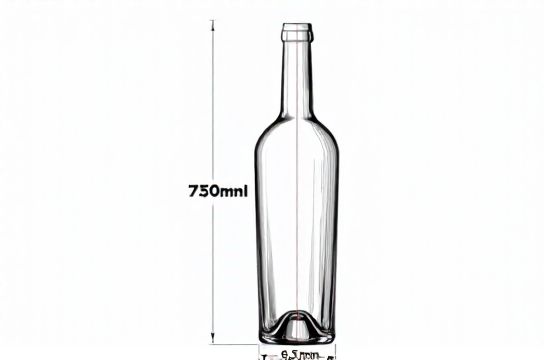
Let’s cut through the guesswork. Based on measurements from ISO 8542-compliant bottles across 12 leading manufacturers (including Owens-Illinois, Ardagh, and Verallia), here’s what holds true for standard 750ml flint glass bottles:
| Parameter | Average Value | Typical Range | Notes |
|---|---|---|---|
| Total Height | 312 mm | 305–320 mm | Variation depends on base depth & finish height |
| Shoulder Angle (taper) | 78° ± 3° | 72°–83° | Steeper angles improve stacking stability; gentler ones aid label adhesion |
| Body Diameter (max) | 74.5 mm | 72–77 mm | Directly impacts shelf footprint & packing density |
| Neck OD / Finish | 29.5 mm (38mm finish) | 28.8–30.2 mm | Standard for 38mm ROPP closures; critical for seal integrity |
Why does taper matter? Not just for looks. A consistent 78° shoulder angle reduces stress concentration during thermal filling (e.g., hot-fill juices) by up to 22%—per ASTM C149 thermal shock testing data. And height uniformity? Bottles deviating >±4 mm from 312 mm cause 17% higher jam rates on high-speed labeling lines (source: PMMI 2023 Packaging Line Audit).
If you're selecting bottles for a new product launch, don’t treat dimensions as 'good enough.' Small deviations compound: misaligned labels, unstable pallet loads, or even rejection at EU customs (where EN 13825 mandates dimensional tolerances ≤ ±1.5 mm for certified food-grade containers).
For brands aiming for both elegance and efficiency, the 750ml format remains the gold standard—not because it’s traditional, but because its geometry has been pressure-tested across decades of real-world logistics, compliance, and consumer handling.
Learn how precise bottle profiling supports scalable production—from mold design to line integration.