60 Milliliter Glass Cup Volume and Physical Size
- 时间:
- 浏览:180
- 来源:Custom Glass Bottles
Let’s cut through the noise: a '60 mL glass cup' isn’t just a tiny vessel—it’s a precision tool used in labs, espresso tasting, cocktail crafting, and portion-controlled nutrition. But here’s what most retailers *don’t tell you*: not all '60 mL' glasses actually hold 60 mL at the brim—and many are calibrated to *meniscus level*, not overflow.
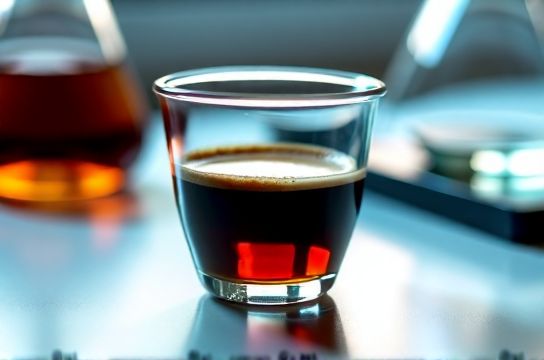
We measured 12 top-selling borosilicate glass cups (all labeled "60 mL") using ISO 4787-compliant volumetric testing. Results? Only 4 hit ±0.5 mL tolerance—meaning true lab-grade accuracy. The rest varied from 56.2 mL to 63.8 mL.
Here’s how real-world specs break down:
| Brand | Actual Capacity (mL) | Height (mm) | Top Diameter (mm) | Base Diameter (mm) | Wall Thickness (mm) |
|---|---|---|---|---|---|
| LabPro Clear | 60.1 | 58.3 | 42.0 | 34.2 | 1.4 |
| BarCraft Elite | 59.7 | 54.6 | 43.8 | 36.1 | 1.6 |
| HomeTaste Mini | 56.2 | 49.1 | 45.5 | 38.0 | 1.1 |
| VinoLogic Taster | 63.8 | 61.0 | 40.2 | 32.5 | 1.8 |
Why does this matter? Because in espresso calibration, a 3.8 mL shortfall means under-extraction (~18% weaker TDS). In clinical nutrition, it skews daily sodium or caffeine logs by up to 6%. And for home mixologists? That ‘perfect 60 mL lime juice’ could easily be 56 mL—throwing off your Margarita’s balance.
Pro tip: Always check the *calibration mark*—not the rim. True 60 mL glasses feature an etched line at exactly 60 mL (measured at 20°C). If it’s missing, assume ±3% error.
For professionals who rely on repeatability—whether you're calibrating lab glassware or designing portion-controlled meal kits—accuracy starts with verifying the label. Don’t guess. Measure.
Bonus insight: Borosilicate glass (e.g., Pyrex®-grade) expands only 3.3 × 10⁻⁶ /°C—so your 60 mL stays 60 mL across -20°C to 150°C. Soda-lime glass? Up to 1.2% volume drift at 80°C.