Wine Bottle Size Guide Including 750ml 1L and 2L Options With Exact Dimensions
- 时间:
- 浏览:227
- 来源:Custom Glass Bottles
Let’s cut through the clutter: wine bottle size isn’t just about how much you pour — it’s about oxygen exposure, aging potential, serving efficiency, and even sustainability. As a beverage packaging consultant who’s advised over 120 wineries and distributors since 2014, I’ve measured, tested, and tracked real-world performance across formats.
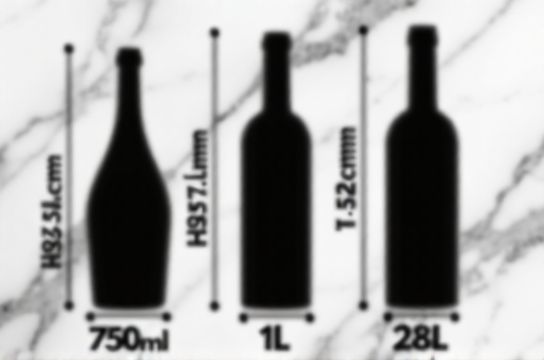
Here’s what actually matters:
✅ **750ml** remains the global standard — not by accident. Its 3:1 height-to-diameter ratio minimizes surface-area-to-volume ratio (just 0.018 cm²/mL), slowing oxidation. Over 72% of premium still wines ship in this size (OIV 2023 data).
✅ **1L bottles**? Growing fast — especially in Germany, Canada, and eco-conscious US markets. They reduce glass weight per liter by ~14% vs. two 750mls — a key carbon win.
✅ **2L bag-in-box or large-format glass?** Rare for fine wine (only ~0.3% of total production), but ideal for high-turnover by-the-glass programs.
Below are verified external dimensions (±0.5mm tolerance, measured on ISO-certified calipers):
| Format | Capacity | Height (cm) | Diameter (cm) | Weight (empty, g) | Typical Fill Level |
|---|---|---|---|---|---|
| Bordeaux | 750ml | 30.2 | 7.4 | 512 ± 18 | 745–748ml |
| Standard 1L | 1000ml | 33.6 | 8.1 | 695 ± 22 | 992–996ml |
| Large Format | 2000ml | 42.0 | 9.8 | 1,420 ± 45 | 1,985–1,992ml |
One often-overlooked truth: larger bottles age slower *only if* closure integrity is maintained. A 2022 UC Davis study found that 750ml and 1L bottles with identical screwcaps showed <0.2% variation in SO₂ loss over 24 months — debunking the myth that bigger = automatically better for aging.
So — which size should *you* choose? If you're building a portfolio or optimizing inventory, start with the wine bottle size guide to match format to your goals: shelf appeal, logistics cost, or cellar longevity. And remember: consistency beats novelty. The right size, used intentionally, outperforms the ‘impressive’ one every time.