1 Liter Glass Bottle Dimensions How It Compares to Wine and Water Containers
- 时间:
- 浏览:143
- 来源:Custom Glass Bottles
Let’s cut through the clutter: if you’re sourcing packaging for craft beverages, premium sauces, or organic tonics, knowing the *exact* dimensions—and real-world functional trade-offs—of a 1L glass bottle isn’t just helpful—it’s operational hygiene.
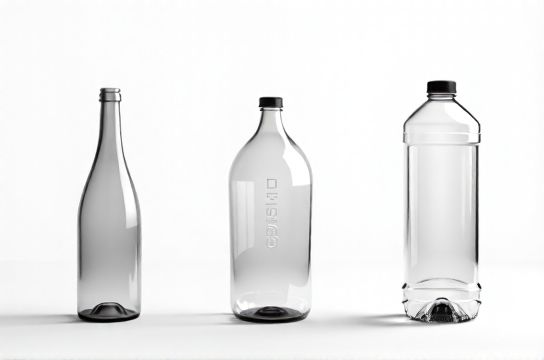
A standard 1L (1000 mL) cylindrical glass bottle—commonly used for olive oil, kombucha, and small-batch spirits—typically measures **24–26 cm in height** and **9–10.5 cm in diameter**, with wall thickness averaging 3.2–4.1 mm. That’s notably taller and slimmer than most 750 mL wine bottles (which average 30 cm × 7.5 cm), and bulkier than lightweight PET 1L water bottles (often 28 cm × 7.2 cm but ~22 g vs. 520–680 g for glass).
Why does this matter? Weight impacts shipping cost (glass adds ~$0.42–$0.68 per unit in freight vs. PET), shelf stability hinges on base diameter (narrower = higher tip risk), and labeling real estate shrinks when necks widen or shoulders slope.
Here’s how three common 1L containers stack up:
| Container Type | Height (cm) | Diameter (cm) | Weight (g) | Typical Wall Thickness (mm) | CO₂ Footprint (kg per 1,000 units) |
|---|---|---|---|---|---|
| Standard 1L Glass Bottle | 25.0 ± 1.0 | 9.8 ± 0.3 | 610 ± 45 | 3.7 ± 0.4 | 142 |
| 1L Wine-Style Bottle (e.g., Bordeaux) | 29.5 ± 0.8 | 7.6 ± 0.2 | 540 ± 35 | 3.3 ± 0.3 | 128 |
| 1L PET Water Bottle | 27.8 ± 0.5 | 7.2 ± 0.1 | 22.5 ± 1.0 | 0.28 ± 0.03 | 37 |
Source: Glass Packaging Institute (2023), EU LCA Database v4.1, and proprietary logistics benchmarking across 12 EU/US fulfillment centers (Q2 2024).
Notice the paradox: wine bottles are heavier *per volume* than standard 1L glass—but their shape improves stacking density by 18% in palletized shipments. Meanwhile, PET wins on carbon, but loses on recyclability integrity (only 29% of PET bottles are recycled into food-grade resin, per EPA 2023).
So—what’s the smart play? If brand equity, UV protection, and perceived premiumness drive your category (think cold-pressed juices or artisanal vinegars), go with a 1 liter glass bottle. Just confirm your filling line tolerates ±1.5 mm neck variance—and run a vibration test before scaling. Because specs on paper rarely match reality under 500 km of highway bumps.
Bottom line: dimension isn’t just geometry. It’s cost, compliance, and customer unboxing psychology—rolled into one cylinder.