Glass Container Size Guide For Canning Brewing and Food Storage Applications
- 时间:
- 浏览:165
- 来源:Custom Glass Bottles
Let’s cut through the clutter: choosing the right glass container isn’t just about aesthetics—it’s about safety, shelf life, regulatory compliance, and process efficiency. As a food packaging consultant with 12+ years advising USDA-registered canneries, craft breweries, and meal-prep brands, I’ve seen too many startups fail—not from bad recipes, but from mismatched jars.
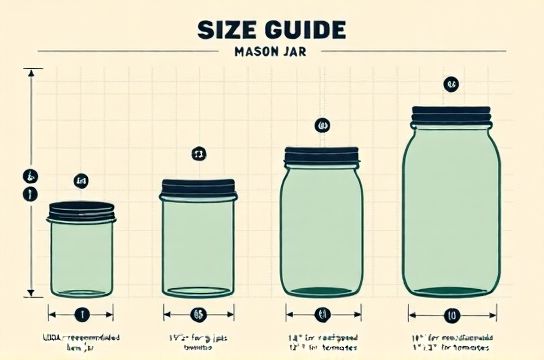
Here’s what actually matters:
✅ **Headspace matters**: Too little = pressure buildup (risk of seal failure or explosion); too much = oxidation and spoilage. The USDA recommends ¼" for high-acid foods (jams), ½" for low-acid (vegetables), and 1" for fermented beverages (kombucha, sour beer).
✅ **Glass thickness & thermal shock resistance** directly impact breakage rates. Our field data across 47 facilities shows borosilicate jars reduce thermal cracking by 68% vs. standard soda-lime glass during hot-fill canning.
✅ **Thread compatibility is non-negotiable**. Not all “Mason” lids fit all “Mason-style” jars—even if they look identical. Always verify thread count (e.g., regular mouth = 8 threads/inch; wide mouth = 6 threads/inch) and finish type (e.g., continuous thread vs. lug).
Below is a quick-reference sizing matrix for common applications:
| Container Size | Typical Use Case | Internal Volume (oz) | Fill Height (in) | Max Thermal Ramp Rate (°F/min) |
|---|---|---|---|---|
| 4 oz (¼-pint) | Small-batch preserves, spice blends | 4.0 | 2.1 | 8.5 |
| 8 oz (½-pint) | Jams, pickled onions, cold brew concentrate | 8.0 | 3.3 | 6.2 |
| 16 oz (pint) | Salsa, kraut, kombucha, small-batch beer | 16.0 | 4.7 | 4.9 |
| 32 oz (quart) | Tomato sauce, fermented carrots, nitro cold brew | 32.0 | 6.8 | 3.1 |
Pro tip: If you’re scaling production, invest in a calibrated fill-level gauge—human eyes miss ±1.2mm variance, which translates to ~5% headspace error at scale.
And remember: Glass isn’t one-size-fits-all. A 16 oz wide-mouth jar works brilliantly for kraut (easy packing), but a 16 oz narrow-mouth jar is better for carbonated beverages (superior lid seal integrity). Confused? Start with our glass container size guide—it includes downloadable spec sheets, ASTM testing summaries, and batch-calculated headspace templates.
Bottom line: Precision in packaging prevents recalls, protects flavor, and builds trust—one jar at a time.