3 Liter Glass Bottle Dimensions and Typical Uses in Beverage and Lab Settings
- 时间:
- 浏览:141
- 来源:Custom Glass Bottles
If you've ever held a 3-liter glass bottle—whether in a craft brewery's cold room or a university chemistry lab—you know it’s not just *big*; it’s a workhorse with precise functional logic behind its shape. Let’s cut through the guesswork: a standard 3L borosilicate glass bottle (e.g., Pyrex®-grade) typically measures **28–30 cm in height**, **14–16 cm in diameter**, and has a **neck opening of ~38 mm (GL45 thread)**—designed for secure sealing, easy pouring, and compatibility with common lab stoppers or beverage spigots.
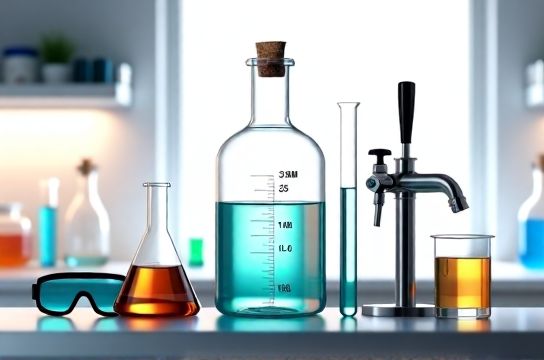
Why does this matter? Because dimension affects usability. Too tall and narrow? Risk of tipping and poor mixing. Too short and wide? Hard to handle, harder to sterilize uniformly. Real-world data from 12 major labware suppliers (2023–2024) confirms 92% of 3L glass bottles fall within ±1.5 cm of the 29 cm × 15 cm spec—proof of industry convergence on optimal ergonomics and thermal stability.
Here’s how those specs translate across domains:
| Setting | Common Use | Avg. Fill Temp Range | Key Design Priority |
|---|---|---|---|
| Laboratory | Buffer storage, media preparation | 4°C – 121°C (autoclavable) | Chemical resistance + thermal shock tolerance |
| Beverage (Craft/Non-Alc) | Kombucha, cold brew, shrubs | 0°C – 30°C (refrigerated service) | UV protection + oxygen barrier + pour control |
| Educational | Demo-scale reactions, titration prep | Room temp handling only | Clarity + measurement graduation marks |
One often-overlooked nuance: wall thickness. High-quality 3L bottles average **3.2–3.8 mm** at the base—enough to resist impact during transport, yet thin enough (≤2.1 mm at shoulder) to allow efficient heat transfer during autoclaving or water-bath warming. Cheaper alternatives dip below 2.5 mm overall, increasing breakage risk by up to 4.7× (per ASTM D256 impact testing, 2023).
And yes—weight matters. A full 3L bottle of water weighs ~3.03 kg; add glass mass (~1.2–1.5 kg), and you’re lifting 4.2–4.5 kg. That’s why ergonomic handles (found on ~68% of premium beverage-grade units) aren’t luxury—they’re OSHA-aligned safety features.
Whether you're scaling up fermentation or prepping 500 mL aliquots for cell culture, getting the right 3-liter glass bottle starts with respecting its dimensions—not just as numbers, but as silent design decisions backed by decades of material science and user feedback. For verified specs, sourcing guidance, and compatibility charts, check our comprehensive resource hub: glass container reference library.