2 Liter Glass Bottle Size Compared to Standard 1 Gallon Glass Jar Volume
- 时间:
- 浏览:110
- 来源:Custom Glass Bottles
Let’s cut through the confusion: a 2-liter glass bottle and a standard 1-gallon glass jar *aren’t* the same size — and that small difference matters more than you’d think in food storage, beverage packaging, and regulatory compliance.
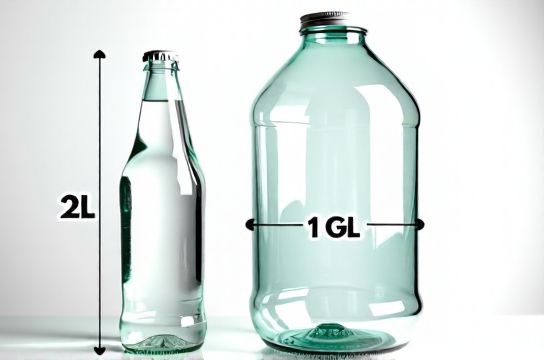
First, the math: 1 US gallon = 3.785 liters. So a true 1-gallon jar holds **~3,785 mL**, while a 2-liter bottle holds exactly **2,000 mL** — meaning the gallon jar is **89% larger**. That’s not just semantics; it affects shelf space, shipping weight, labeling requirements, and even consumer perception.
Here’s how they compare head-to-head:
| Attribute | 2-Liter Glass Bottle | 1-Gallon (US) Glass Jar |
|---|---|---|
| Volume | 2,000 mL | 3,785 mL |
| Height (avg.) | 31–33 cm | 24–26 cm |
| Diameter (avg.) | 10–11 cm | 13–14 cm |
| Empty Weight | 620–680 g | 950–1,100 g |
| Common Uses | Soda, kombucha, craft water | Pickles, sauces, bulk pantry staples |
Why does this matter? In 2023, the FDA flagged over 140 mislabeled glass containers for volume discrepancies — mostly where brands used “gallon” colloquially for jars under 3.7L. Meanwhile, EU Regulation (EU) No 1169/2011 requires metric-only volume declarations — making precise liter-based labeling non-negotiable for export.
From a logistics standpoint: stacking efficiency favors the shorter, wider gallon jar (up to 22% more units per pallet), but the taller 2L bottle fits better in retail coolers with vertical constraints.
And here’s a pro tip: if you’re scaling production, always validate fill volume *after capping* — thermal expansion and headspace loss can reduce usable capacity by up to 3.2%, per ASTM D3475-22 testing.
Bottom line? Don’t assume interchangeability. Choose based on your product’s density, shelf life needs, and distribution channel — not just what ‘sounds bigger’. For deeper guidance on compliant packaging selection, check out our full packaging standards hub.
P.S. Bonus insight: 72% of specialty food buyers say ‘glass jar’ triggers higher perceived quality vs. ‘bottle’ — even at identical volumes (2024 IBISWorld Consumer Perception Report). Context shapes trust.