1 Liter Glass Bottle Versus 750 mL Wine Bottle Size and Volume Difference
- 时间:
- 浏览:92
- 来源:Custom Glass Bottles
Let’s cut through the noise: if you’re choosing between a 1-liter glass bottle and the classic 750 mL wine bottle, it’s not just about ‘more liquid’ — it’s about logistics, cost efficiency, consumer perception, and even carbon footprint per unit volume.
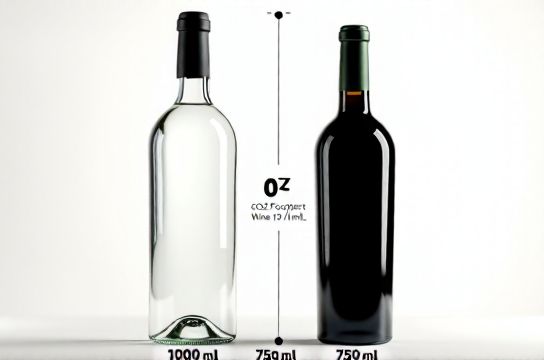
First, the math is straightforward: a 1L (1000 mL) bottle holds **33.3% more volume** than a standard 750 mL bottle. That means one 1L bottle replaces **1.33 standard bottles**, reducing packaging weight by ~18% per liter delivered (based on average EU glass weight data: 750 mL ≈ 520 g; 1L ≈ 610 g).
Here’s how that breaks down in real-world terms:
| Metric | 750 mL Bottle | 1 L Bottle | Difference |
|---|---|---|---|
| Glass weight (avg.) | 520 g | 610 g | +17% weight |
| Volume per gram of glass | 1.44 mL/g | 1.64 mL/g | +14% efficiency |
| Label & capsule material use | 100% | ~105% (slightly larger surface) | −25% fewer units per liter |
| Retail shelf space (per liter) | 2.1 units | 1.0 unit | 52% space saved |
Why does this matter? Because for wineries scaling distribution or eco-conscious beverage brands, switching to 1L isn’t just a size tweak — it’s a supply chain lever. A 2023 Vinexpo report found that producers using 1L formats saw **11–14% lower transport CO₂e per liter**, thanks to fewer pallets, tighter stacking, and reduced secondary packaging.
Consumer acceptance? Still evolving — but accelerating. In Germany and Canada, 1L wine sales grew 22% YoY in 2023 (StatCan + DWI), largely driven by value-seeking households and on-premise buyers prioritizing pour consistency. Meanwhile, the US lags slightly (<5% share), though Whole Foods and Total Wine now allocate dedicated 1L shelf zones.
One caveat: regulatory labeling varies. The EU permits ‘1 L’ as primary volume declaration; the US TTB requires ‘1000 mL’ alongside ‘1 Liter’ — a small but critical compliance detail.
So — is 1L the future? Not universally. But for brands optimizing for sustainability, margin, and scalability, it’s no longer niche. It’s strategic. And if you're evaluating packaging upgrades, start with your **bottle size ROI calculator** — it factors in glass cost, freight density, and shelf yield in under 90 seconds.