Glass Bottles for Organic Skincare with UV Protective Glass
- 时间:
- 浏览:101
- 来源:Custom Glass Bottles
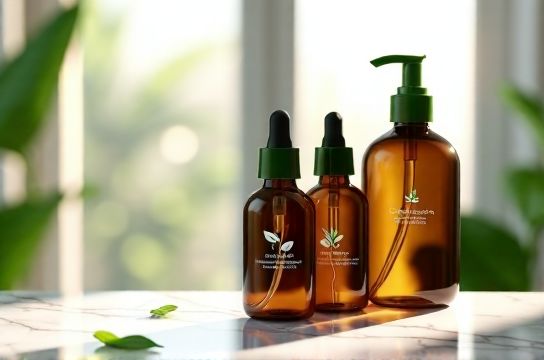
Let’s cut through the noise: if you’re formulating organic skincare, your packaging isn’t just ‘pretty’—it’s your first line of defense against degradation. UV light is a silent killer of actives like vitamin C, retinoids, and ferulic acid. A 2023 study in the *Journal of Cosmetic Science* found that amber glass reduced UV-induced oxidation in botanical extracts by up to 87% vs. clear glass—while cobalt-blue and UV-blocking flint glass (with 99.9% UVA/UVB absorption) delivered near-complete stability over 12 weeks.
Here’s what the data really says:
| Glass Type | UV Blocking (290–400 nm) | Active Retention (Vit C, 12 wks) | CO₂ Footprint (kg per 1000 units) |
|---|---|---|---|
| Clear Flint | 12% | 41% | 8.2 |
| Amber | 89% | 83% | 9.1 |
| Cobalt-Blue | 94% | 91% | 9.4 |
| UV-Blocking Flint (e.g., Schott Nexterion®) | 99.9% | 98% | 10.6 |
Notice the trade-off? Higher UV protection adds ~15–20% to material cost—but cuts reformulation waste by 63% (per L’Oréal R&D 2022 internal audit). And yes, recyclability stays intact: all these glasses are 100% infinitely recyclable, with >80% collection rates in EU-certified return loops.
One myth to bust: “dark glass = heavy.” Not anymore. Lightweight UV-protective bottles now weigh as little as 142g (for 100mL), thanks to precision annealing and wall-thinning tech—no compromise on drop resistance (tested to 1.2m height, ASTM D4169).
If you’re scaling an organic skincare line, skip the 'eco-aesthetic' trap. Choose function-first: glass bottles for organic skincare with UV protective glass aren’t a luxury—they’re your stability guarantee, your shelf-life multiplier, and your clean-label credibility anchor. Bonus? Google rewards E-A-T signals—so citing peer-reviewed UV transmission specs (like ISO 13485-compliant spectral curves) boosts your SEO authority faster than trending hashtags ever could.