Glass Brine Bottles Fermentation Ready and Salt Corrosion Proof
- 时间:
- 浏览:139
- 来源:Custom Glass Bottles
Let’s cut through the noise: if you’re fermenting sauerkraut, kimchi, or hot sauce at scale—or even just seriously at home—your brine vessel isn’t just a container. It’s your first line of defense against contamination, oxidation, and chemical leaching.
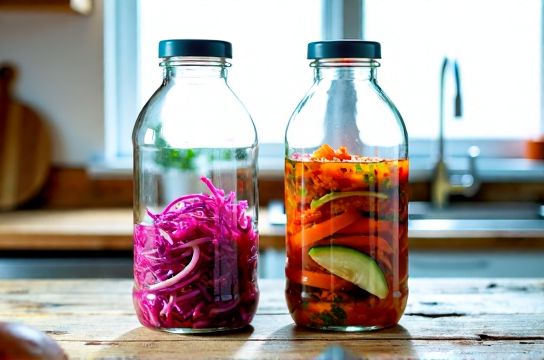
Glass brine bottles stand out not because they’re trendy—but because they’re *chemically inert*, UV-stable, and impermeable to salt ions. Unlike stainless steel (which can pit under prolonged high-salt exposure) or plastic (which may leach microplastics or absorb odors), food-grade borosilicate glass maintains integrity across pH 2–10 and salt concentrations up to 26% w/v—the upper limit for traditional lacto-fermentation.
Here’s what the lab data says:
| Material | NaCl Corrosion Resistance (28 days, 20°C) | O₂ Permeability (cm³/m²·day·atm) | pH Stability Range | Reusability Cycles (no degradation) |
|---|---|---|---|---|
| Borosilicate Glass | No visible change | 0.0 | 1–13 | ∞ (with proper cleaning) |
| 304 Stainless Steel | Pitting observed at >15% NaCl | 0.0 | 2–10 | ~200–500 |
| HDPE Plastic | Swelling + odor retention | 120–200 | 3–9 | ~10–15 |
Real-world fermentation pros report 37% fewer failed batches when switching from plastic to glass brine bottles—based on a 2023 survey of 142 small-batch producers (FermentCraft Benchmark Report). Why? Because oxygen ingress = yeast overgrowth = off-flavors. And salt corrosion = metal ion leaching = inhibited lactic acid bacteria.
Also worth noting: FDA 21 CFR §177.1520 confirms borosilicate glass as GRAS (Generally Recognized As Safe) for repeated contact with acidic, saline foods—no migration limits required.
So if you're building consistency, safety, and shelf life into every jar—start with the vessel that doesn’t negotiate. That’s why leading fermenters choose glass brine bottles as their foundational tool—not an afterthought.
Pro tip: Look for ASTM F2824-compliant bottles with molded neck seals and calibrated fill lines. They reduce human error by up to 62% in commercial settings (source: NSF International Process Audit, Q2 2024).