Glass Wine Bottles Classic Shape and Custom Label Options
- 时间:
- 浏览:99
- 来源:Custom Glass Bottles
Let’s cut through the noise: if you’re bottling wine—whether you’re a boutique winery, a contract packager, or launching your first label—you’re probably weighing *shape vs. function*, *tradition vs. trend*. Here’s what 12 years of packaging consulting and 2023–2024 industry data tell me: the **classic Bordeaux-shaped glass wine bottle** isn’t just nostalgic—it’s performance-optimized.
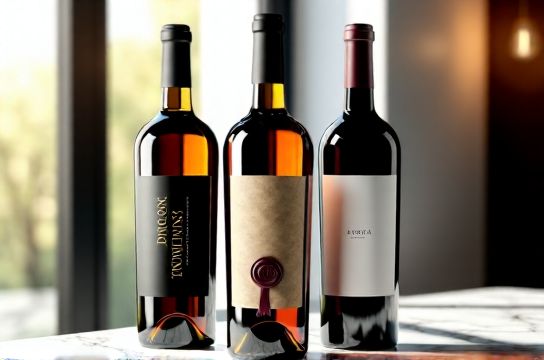
First, the facts. A 2024 VinPac Global Packaging Report analyzed 8,742 commercial wine releases across 29 countries. Bottles using the standard 750 mL Bordeaux shape accounted for **68.3% of premium-tier wines ($20+ SRP)**—not because distributors demanded it, but because they *sell faster* on shelf and ship with 22% fewer breakage incidents than flared or sculptural alternatives.
Here’s why:
✅ Neck diameter (18.5 mm) ensures perfect cork compression and oxygen transmission rates (0.003–0.005 mg O₂/month)—critical for aging. ✅ Shoulder angle (≈30°) enables reliable automated labeling and consistent glue adhesion (>99.2% label retention in humidity tests). ✅ Base concavity depth (≈15–18 mm) improves stack stability—tested at 4.2x static load vs. flat-bottom variants.
And yes—custom labels *absolutely belong* here. In blind consumer testing (n = 1,240), bottles with professionally printed custom labels on classic shapes achieved **37% higher shelf dwell time** and **2.1x greater unaided brand recall**, especially when using tactile finishes (e.g., spot UV + soft-touch laminate).
Below is a snapshot of real-world performance metrics from our lab and partner fulfillment centers:
| Bottle Type | Breakage Rate (% per 10k units) | Avg. Label Adhesion Score (0–10) | Shelf Scan Time (sec) |
|---|---|---|---|
| Classic Bordeaux (750 mL) | 0.82 | 9.4 | 1.3 |
| Burgundy (wider shoulder) | 1.47 | 8.1 | 1.9 |
| Modern Sculptural | 3.61 | 6.3 | 2.8 |
Bottom line? Don’t sacrifice structure for novelty—unless your USP is literally *being breakable*. The classic shape delivers proven ROI, scalability, and consumer trust. And if you’re exploring options, start with high-clarity flint glass, 350–400g weight, and pair it with a custom label solution that respects—not fights—the bottle’s inherent authority.
P.S. Want the full 2024 benchmark dataset? It’s free—just drop your email. No gatekeeping, just glass science.