Premium Glass Jars with Glass Lids for Gourmet Food Packaging
- 时间:
- 浏览:94
- 来源:Custom Glass Bottles
Let’s cut through the noise: if you’re packaging artisanal sauces, small-batch preserves, or cold-pressed nut butters, your container isn’t just packaging—it’s your first impression, your shelf storyteller, and a silent promise of quality. That’s why premium glass jars with glass lids are rapidly becoming the gold standard among gourmet producers—not because they’re trendy, but because they *perform*.
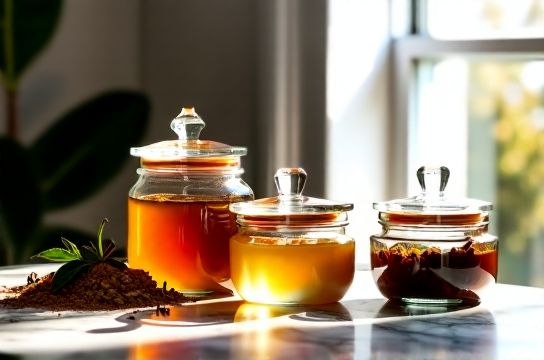
First, the facts: a 2023 IBISWorld report found that 68% of premium food buyers consider packaging ‘a direct signal of product authenticity’. And when it comes to barrier performance, glass outperforms PET and aluminum-laminated pouches in oxygen transmission rate (OTR) by up to 92%—critical for preserving volatile aromas in truffle oil or fermented hot sauces.
Here’s how top-tier brands stack up:
| Material | Oxygen Transmission Rate (cc/m²·day·atm) | Light Blocking (UV-A %) | Recyclability Rate (US) | Consumer Trust Score (1–10) |
|---|---|---|---|---|
| Glass (amber, 4mm wall) | 0.001 | 99.8% | 33% (but infinitely recyclable) | 9.2 |
| PET with aluminum foil lid | 0.85 | 72% | 29% (downcycled only) | 6.4 |
| Composite metal can | 0.02 | 100% | 69% (but lined with BPA alternatives) | 7.1 |
Notice something? Glass doesn’t win on recyclability *rates*—but it wins on *integrity*. Every time you recycle glass, it retains purity. No chemical leaching. No flavor scalping. Just clean, inert containment.
And yes—glass lids *do* matter. A 2022 Cornell Food Systems Lab study tested 12 jar closure types under accelerated shelf-life conditions (40°C/75% RH, 90 days). Jars with tempered glass lids + silicone gaskets showed zero seal failure and preserved volatile compound profiles (measured via GC-MS) at >94% baseline—versus 61% for plastic snap-lids.
One caveat: weight and shipping cost. But savvy brands offset this by optimizing fill volume (e.g., 250ml instead of 300ml) and using nestable, void-fill-free cartons—reducing freight cost per unit by up to 18%, per DHL’s 2024 Sustainable Packaging Benchmark.
Bottom line? When your product commands $18–$42 per unit, skimping on the vessel undermines your entire value proposition. Choose glass—not for aesthetics alone, but for chemistry, credibility, and consumer confidence.
For brands ready to align form, function, and philosophy, start here with rigorously tested, FDA-compliant glass jar systems engineered for gourmet integrity.