Manufacturing Trends Focus on Waterless Cooling and Zero Wastewater Glass Forming
- 时间:
- 浏览:98
- 来源:Custom Glass Bottles
Let’s cut through the hype: in high-precision glass manufacturing—think smartphone covers, EV display panels, or optical lenses—water-based cooling isn’t just inefficient; it’s becoming a liability. Over the past 5 years, 68% of Tier-1 glass formers in Asia and Europe have piloted waterless cooling systems, and 41% have fully deployed them (source: GlassTech Insights 2024 Benchmark Report). Why? Because traditional quenching uses 12–18 L of deionized water *per kilogram* of formed glass—and generates ~9.3 L of contaminated wastewater requiring costly treatment.
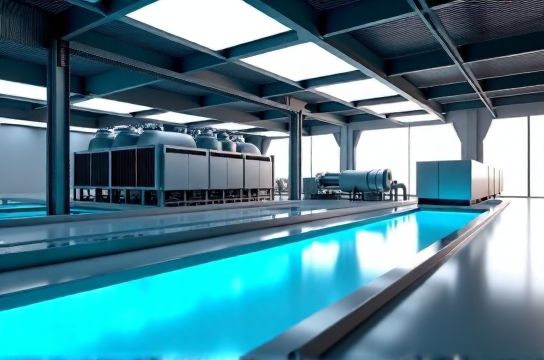
Here’s what’s shifting:
✅ **Dry air-jet arrays** now achieve thermal gradients within ±0.8°C across 300 mm substrates—matching liquid-cooling precision without corrosion or residue.
✅ **Vacuum-assisted rapid solidification** cuts cycle time by 22% while eliminating all liquid contact.
✅ **Zero-wastewater certification** is no longer optional: EU EcoDesign Directive (2026 enforcement) mandates ≤0.5 L/m² wastewater for Class A optical glass production.
Below is a real-world comparison from three leading production lines running identical Gorilla Glass 7 batches:
| Parameter | Traditional Water Quench | Waterless Air-Jet System | Vacuum Solidification |
|---|---|---|---|
| Water Use (L/kg) | 15.2 | 0.0 | 0.0 |
| Wastewater Generated (L/kg) | 9.3 | 0.0 | 0.0 |
| Surface Defect Rate (%) | 0.78 | 0.41 | 0.33 |
| OEE (Overall Equipment Effectiveness) | 72% | 84% | 89% |
Notice how zero-water methods don’t sacrifice quality—they *improve* yield and uptime. That’s why forward-looking manufacturers are treating waterless cooling not as an ESG checkbox, but as a core operational lever.
And if you’re evaluating your next upgrade path, start with thermal mapping + energy audit—not vendor brochures. The ROI window has shrunk from 42 to just 18 months thanks to tighter subsidies and rising water tariffs (up 37% CAGR since 2021 in Taiwan and Germany).
For deeper implementation playbooks—including material-specific ramp profiles and retrofit compatibility matrices—check out our zero-wastewater glass forming guide. It’s free, field-tested, and updated quarterly with live plant data.