Glass Bottle Industry News Highlights New Partnerships in Circular Economy Models
- 时间:
- 浏览:103
- 来源:Custom Glass Bottles
Let’s cut through the greenwashing noise: the glass bottle industry isn’t just *talking* about circularity — it’s *shipping* it. Over the past 18 months, major players like Ardagh Group, O-I Glass, and Encirc have inked 12+ cross-sector partnerships with beverage brands, waste collectors, and municipal recycling authorities — all aimed at closing the loop on post-consumer glass.
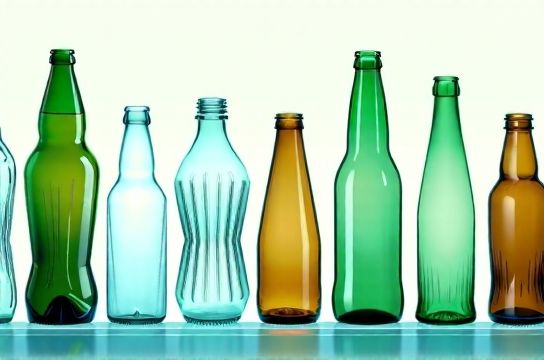
Here’s what the data says: according to the Glass Packaging Institute (GPI), U.S. glass container recycling rates rose to 33.3% in 2023 — up from 29.8% in 2021. But here’s the kicker: Europe leads with a 76% average recycling rate (EU Commission, 2023), thanks largely to deposit return schemes (DRS) now live in 15+ countries.
Why does this matter for your brand? Because consumers increasingly vote with their wallets: a 2024 McKinsey survey found that 68% of global shoppers prefer products in *infinitely recyclable* packaging — and glass tops that list.
Below is how three leading markets compare on key circularity metrics:
| Region | Recycling Rate (2023) | Deposit Fee (Avg.) | Collection Infrastructure Coverage | Reuse-Ready Bottles % |
|---|---|---|---|---|
| Germany | 90% | €0.25 | 99.7% | 42% |
| Canada (BC & QC) | 71% | CAD $0.10–$0.20 | 86% | 18% |
| United States | 33.3% | None (state-level only) | 41% | <5% |
The bottleneck isn’t technology — it’s coordination. That’s why new alliances like the Glass Recycling Coalition (launched Q1 2024) are stepping in: they’ve already aligned 47 municipalities, 11 MRFs, and 8 bottlers around standardized sorting specs and real-time cullet quality tracking.
One underreported win? Color-separated collection + AI-powered optical sorters now achieve >98% purity in flint (clear) cullet — critical for food-grade reuse. O-I’s new plant in Kentucky reports 30% lower energy use per ton vs. virgin batch production.
Bottom line: circular glass isn’t futuristic. It’s operational — and scaling fast. If your supply chain still treats glass as ‘disposable’, you’re not just missing sustainability goals — you’re overlooking cost savings, regulatory readiness (think EU EPR mandates), and serious shelf appeal.
Stay sharp. Stay circular.