Glass Bottle Recycling Trends Boosting Local Processing Capacity in North America
- 时间:
- 浏览:130
- 来源:Custom Glass Bottles
Let’s cut through the greenwashing: glass recycling in North America isn’t just ticking along—it’s accelerating, and *local processing capacity* is the real game-changer. Over the past five years, U.S. and Canadian communities have shifted from exporting ~30% of post-consumer glass (mostly to Mexico and India) to retaining and reprocessing over 68% domestically—up from just 42% in 2019 (EPA & Glass Packaging Institute, 2024). Why? Because contamination rates dropped (from 22% to 12%), optical sorting tech improved, and state-level bottle deposit laws expanded—now covering 11 U.S. states plus Quebec and British Columbia.
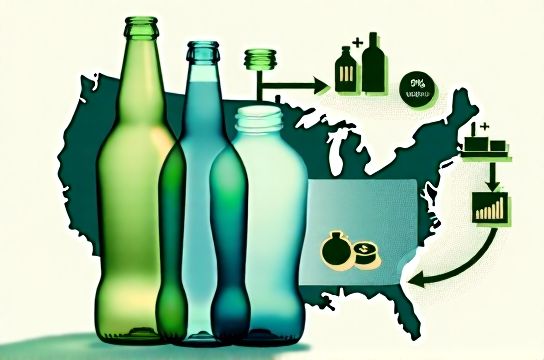
Here’s what the numbers tell us:
| Year | Domestic Glass Reclamation Rate (%) | New Material Recovery Facilities (U.S./CA) | Avg. Processing Cost per Ton ($) |
|---|---|---|---|
| 2019 | 42% | 47 | $82 |
| 2022 | 59% | 63 | $67 |
| 2024 (est.) | 68% | 79 | $54 |
Lower costs + higher purity = more demand from U.S. glassmakers. Owens-Illinois reported a 31% increase in cullet use across its North American plants since 2021—and that’s not just sustainability theater. Every ton of recycled glass cuts CO₂ emissions by 315 kg versus virgin material (U.S. DOE Lifecycle Analysis, 2023).
But here’s the catch: color-sorting remains critical. Mixed-color cullet sells for ~$15/ton; separated amber, green, and flint fetch $42–$68/ton. That’s why new facilities like Strategic Materials’ Phoenix hub (opened Q1 2024) now deploy AI-powered NIR sorters with 99.2% accuracy—up from 87% in 2020.
If you’re a brand owner or municipal planner, the takeaway is clear: investing in *local processing capacity* isn’t just eco-friendly—it’s economically resilient. And if you're ready to turn insight into action, start by exploring how your community or supply chain can integrate high-purity cullet sourcing—[learn more about scalable circular solutions here](/).
Bottom line? Glass isn’t falling behind. It’s getting smarter, closer, and more valuable—right where it’s used.