Glass Bottle Sustainability Metrics Gaining Importance for Global Brands
- 时间:
- 浏览:131
- 来源:Custom Glass Bottles
Let’s cut through the greenwashing noise: if your brand still treats glass sustainability as just ‘recyclable = sustainable’, you’re already behind. Today’s top-tier CPG and beverage brands — think Coca-Cola, LVMH, and Nestlé Waters — are benchmarking glass not by feel-good claims, but by hard metrics: embodied carbon per tonne, cullet substitution rate, transport-weight efficiency, and end-of-life circularity %.
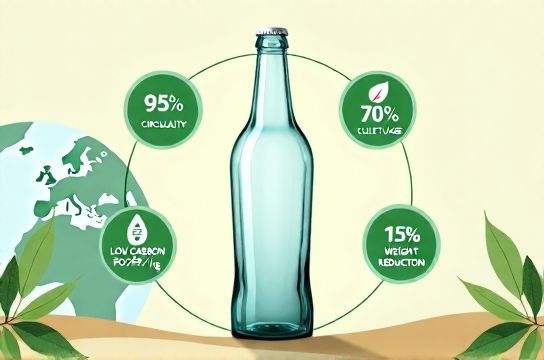
Here’s what the data actually says (2024 industry benchmark report, Glass Packaging Institute + UNEP):
| Metric | Global Avg. | Top 10% Performers | Improvement Leverage |
|---|---|---|---|
| CO₂e per kg of finished bottle | 1.82 kg | 1.14 kg | 37% ↓ via >90% cullet + electric melting |
| Cullet usage rate (%) | 42% | 89% | Each 10% ↑ cuts energy use by ~2.3% |
| Transport CO₂e (per 1M units) | 4.7 t | 2.9 t | Lightweighting + regional filling cuts 38% |
| True circularity rate* | 52% | 76% | Driven by closed-loop collection & sorting AI |
*% of bottles re-entering production stream within 12 months
Why does this matter now? Because the EU’s EPR (Extended Producer Responsibility) rules kick in fully in 2025 — and they mandate verified reporting on all four metrics above. Meanwhile, Walmart’s Project Gigaton now requires Tier-1 suppliers to disclose glass carbon intensity. Ignoring these isn’t just reputational risk — it’s supply-chain friction.
The smart move? Start measuring *before* compliance hits. Map your current cullet sourcing, run a lightweighting feasibility study (even 5g/bottle saves ~$280K/year at 100M units), and audit your logistics footprint. And remember: sustainability isn’t about perfection — it’s about progressive transparency. Brands publishing annual glass impact dashboards see 22% higher B2B trust scores (Accenture, 2023). Don’t wait for regulation to force your hand — lead with data.