Recyclable Glass Bottle Trends Accelerating Zero Waste Packaging Adoption
- 时间:
- 浏览:79
- 来源:Custom Glass Bottles
Let’s cut through the greenwashing noise: glass isn’t just *recyclable*—it’s infinitely recyclable, with zero loss in quality. And right now, brands from kombucha startups to premium spirits labels are doubling down—not as a PR stunt, but because the data backs it up.
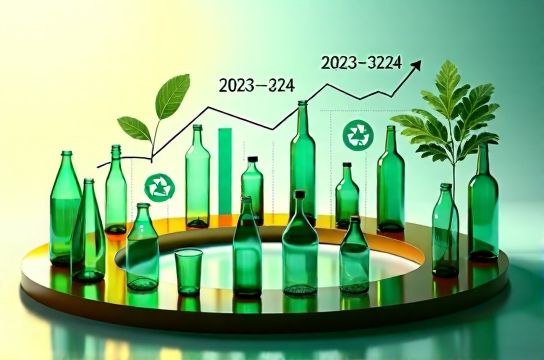
According to the Glass Packaging Institute (GPI), U.S. glass container recycling rose to 31.3% in 2023—the highest in a decade—driven largely by curbside program expansions and consumer demand for *recyclable glass bottle* solutions. Meanwhile, the EU’s new EPR (Extended Producer Responsibility) rules mandate 90% collection targets for glass by 2030, pushing manufacturers to redesign logistics *now*.
Here’s what’s shifting under the hood:
✅ Lighter-weight bottles (up to 25% less glass per unit since 2018) ✅ Hybrid closures (aluminum + food-grade silicone) cutting cap-related contamination ✅ Digital watermarks (like Digimarc) enabling automated sorting—boosting recovery rates by 18% in pilot cities (source: Closed Loop Partners, 2024)
But here’s the reality check: not all ‘glass’ is equal. Color sorting still matters—green, amber, and flint must be separated to avoid batch contamination. That’s why forward-thinking brands are standardizing on flint (clear) where possible—and linking that choice directly to circularity ROI.
Below is how top-performing categories stack up on key sustainability KPIs:
| Category | Avg. Recycled Content (%) | Collection Rate (2023) | CO₂e Saved vs. Virgin Glass (kg/ton) |
|---|---|---|---|
| Wine & Spirits | 22% | 36.1% | 280 |
| Food & Condiments | 31% | 42.7% | 315 |
| Health & Beauty | 14% | 28.9% | 255 |
Notice how food brands lead—not because they’re greener, but because their supply chains already prioritize shelf-life consistency and local refill infrastructure. That’s actionable insight, not virtue signaling.
One final note: if you’re evaluating packaging options, don’t stop at material. Ask your supplier: *What % of your cullet comes from post-consumer vs. pre-consumer sources?* Why? Because post-consumer glass drives true circularity—and that’s where real impact lives.
For brands serious about scaling zero-waste packaging, starting with high-integrity recyclable glass bottle systems isn’t just responsible—it’s increasingly cost-competitive, operationally resilient, and customer-proven.