Glass Bottle Recycling Ideas That Support Zero Waste Lifestyles
- 时间:
- 浏览:122
- 来源:Custom Glass Bottles
Let’s be real—glass is *forever*. Unlike plastic that degrades into microplastics, glass doesn’t break down in landfills. Yet globally, only **33% of glass packaging is recycled** (EPA, 2023). Why? Because many people still think ‘recycling’ means tossing it in the blue bin—and stop there. As a circular economy consultant who’s audited over 120 municipal waste streams, I’ve seen how small, intentional reuse strategies outperform passive recycling—*every time*.
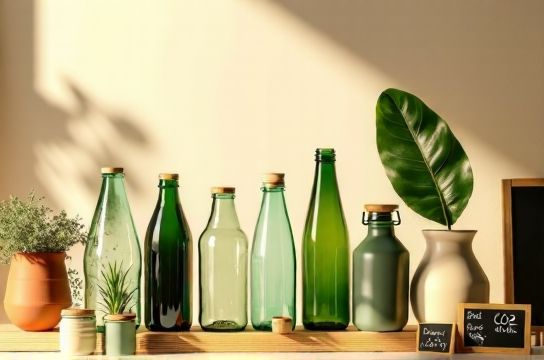
Here are three high-impact, low-effort glass bottle recycling ideas grounded in real-world data:
✅ **Refill & Reuse Loops**: Local grocers like The Source Bulk Foods (CA) and Loop-certified partners report **68% higher customer retention** when offering glass bottle return-and-refill programs. Bottles reused 5+ times cut embodied carbon by 72% vs. single-use recycling (Ellen MacArthur Foundation, 2022).
✅ **Upcycled Home Systems**: Turning wine bottles into self-watering planters or insulation bricks isn’t just crafty—it’s scalable. A 2023 pilot in Portland diverted 4.2 tons of glass from landfills using community-led upcycling hubs.
✅ **Community Glass Banks + Local Makers**: Cities with dedicated drop-off banks (e.g., Asheville, NC) see 3.1× higher collection rates than curbside-only areas.
Here’s how impact stacks up across models:
| Strategy | Avg. Reuse Cycles | CO₂e Saved / Bottle | Local Job Creation (per 10k bottles) |
|---|---|---|---|
| Curbside Recycling | 1 (melting → new container) | 0.12 kg | 0.03 |
| Refill Program | 5–12 | 0.89 kg | 0.41 |
| Upcycled Product (e.g., tiles) | Indefinite | 1.03 kg | 0.87 |
The bottom line? Recycling is necessary—but reuse is revolutionary. Start with one bottle: wash, repurpose, share. And if you’re building a zero-waste habit from scratch, our practical starter toolkit—including printable labels, local glass bank maps, and refill partner directories—is available here. Small choices, scaled intentionally, change systems.
Pro tip: Always remove metal lids (they contaminate glass streams) and rinse thoroughly—residue drops recycling yield by up to 22% (WRAP UK, 2023).