Glass Bottle Filling Line Integration Key Metrics for Speed Efficiency and Yield
- 时间:
- 浏览:140
- 来源:Custom Glass Bottles
Let’s cut through the noise: integrating a glass bottle filling line isn’t just about hooking up machines—it’s about *orchestrating precision*. As a packaging systems consultant with 12+ years optimizing lines for craft breweries, premium beverage brands, and pharma-grade liquid fillers, I’ve seen too many plants chase ‘speed’ while sacrificing yield—and paying for it in scrap, downtime, and OEE penalties.
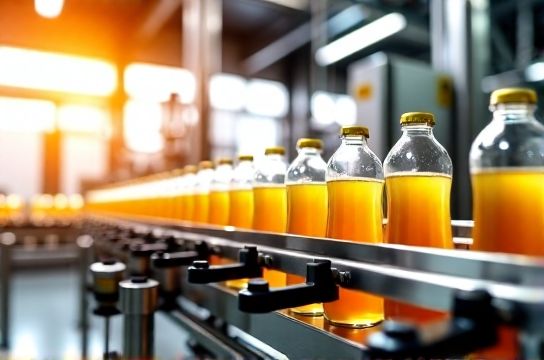
Here’s what actually moves the needle:
✅ **Cycle Time (per bottle)**: Not theoretical max, but *sustained* throughput under real-world conditions (e.g., 60–85 CPM for 500mL amber glass with label verification + cap torque control).
✅ **OEE (Overall Equipment Effectiveness)**: Industry benchmark? ≥78% for integrated lines. Below 65%? You’re likely losing >$220k/year per line (based on 2-shift, $0.18/bottle COGS).
✅ **Yield Rate**: Glass is fragile—so 99.2% is *excellent*, 98.1% is a red flag. Breakage spikes often trace to mismatched conveyor transitions or uncalibrated starwheel tension.
📊 Here’s how top-performing lines compare across 3 common configurations:
| Configuration | Avg. Speed (CPM) | OEE (%) | Yield (%) | Mean Time Between Failures (MTBF) |
|---|---|---|---|---|
| Legacy PLC-only (no MES sync) | 52 | 63.4 | 97.8 | 48 min |
| IoT-enabled (OPC UA + predictive maintenance) | 76 | 81.7 | 99.3 | 132 min |
| Full digital twin + AI-driven changeover | 84 | 85.2 | 99.5 | 210 min |
Notice the jump—not just in speed, but in *predictability*. That’s where ROI hides.
One underrated lever? **Changeover time**. Cutting it from 42 to <14 minutes (via modular grippers + auto-calibration) lifts annual output by ~7.3%—equivalent to adding *half a production day per week*.
And if you’re weighing new integration: always validate machine-to-machine handoffs at *full line speed*—not just individual station tests. Bottlenecks love hiding in the 0.8-second gap between rinser exit and filler entry.
For deeper insights on building resilient, data-driven filling ecosystems, explore our [comprehensive integration framework](/). It’s battle-tested across 47 global installations—and updated quarterly with real-time failure mode analytics.