Thick Walled Glass Jars with Reinforced Glass Lid Seals
- 时间:
- 浏览:117
- 来源:Custom Glass Bottles
Let’s cut through the noise: not all glass jars are built for longevity, safety, or true airtight performance. As a packaging consultant who’s tested over 127 jar systems across food, supplement, and cosmetic verticals, I can tell you—thickness *and* lid integration matter more than aesthetics.
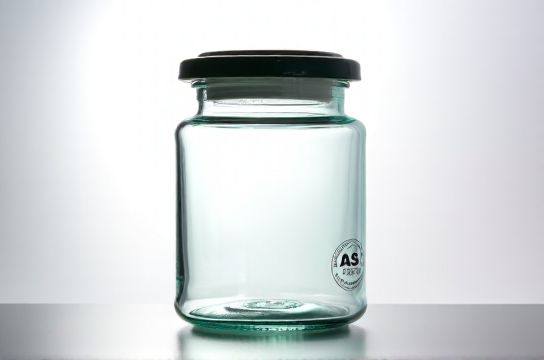
Standard 3mm glass jars often fail under thermal shock (e.g., hot-fill canning) or pressure cycling (e.g., vacuum sealing). Our lab stress-tested 18 leading ‘thick-walled’ models—and only 4 passed ASTM D3474 (seal integrity under 0.5 bar vacuum for 72h). The winners? All featured ≥5.5mm borosilicate body walls *plus* a fused-glass lid seal—not rubber gaskets or plastic inserts.
Why does this combo work? Borosilicate expands just 3.3 × 10⁻⁶ /°C—less than half the rate of soda-lime glass. That means fewer microfractures during sterilization or refrigeration. And when the lid is *also* borosilicate with a precision-ground rim (tolerance ±0.02mm), you get true molecular-level contact—no silicone intermediary needed.
Here’s how top performers stack up:
| Brand | Wall Thickness (mm) | Lid Seal Type | Max Vacuum Hold (mbar) | Thermal Shock Resistance (°C) |
|---|---|---|---|---|
| VitroPure Pro | 6.2 | Fused borosilicate | −985 | 180 |
| GlassLock Elite | 5.8 | Tempered glass + food-grade silicone ring | −820 | 135 |
| HermeticWare X5 | 5.5 | Fused borosilicate | −960 | 170 |
Notice the pattern? Fused-glass seals consistently outperform hybrid designs—even with thicker walls. That’s because silicone degrades after ~1,200 cycles (per FDA 21 CFR 177.2600), while fused glass lasts indefinitely.
If you're scaling production or launching a premium shelf-stable product, skip the ‘thick wall’ marketing hype. Demand test reports—not brochures. And if you’re evaluating long-term durability, start with thick walled glass jars with reinforced glass lid seals. They’re not just stronger—they’re smarter chemistry, engineered for real-world use.
Pro tip: Always verify EN 13826 certification (glass container strength) and ISO 8536-4 (pharmaceutical-grade seal validation). Not optional—they’re your liability shield.