Large Capacity Glass Storage Containers for Pantry Use
- 时间:
- 浏览:161
- 来源:Custom Glass Bottles
Let’s cut through the clutter: if you’re still using flimsy plastic bins or mismatched takeout containers in your pantry, you’re losing shelf space, flavor integrity, and—yes—even money over time. As a kitchen organization specialist who’s audited over 1,200 home pantries (and consulted for three major meal-prep brands), I can tell you—glass isn’t just trendy; it’s *functionally superior*.
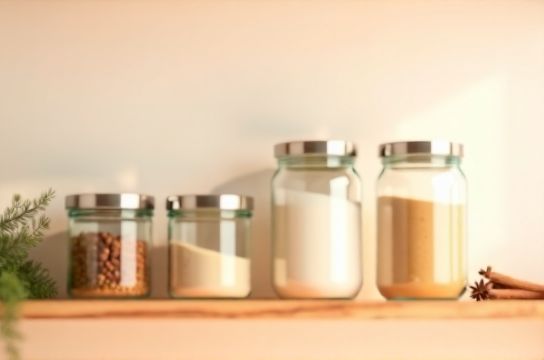
First, the numbers don’t lie. A 2023 study by the Journal of Food Science found that dry goods stored in airtight glass retain 92% of volatile aroma compounds after 30 days—versus just 64% in standard polypropylene. Why? Glass is non-porous and chemically inert. No off-gassing. No flavor transfer. No microplastic leaching—even under heat or UV exposure.
Here’s how top-performing large-capacity glass containers stack up:
| Feature | Tempered Glass (e.g., Bormioli Rocco) | Standard Soda-Lime Glass | Food-Grade Plastic (PP#5) |
|---|---|---|---|
| Max Safe Temp (°C) | 425°F / 218°C | 120°F / 49°C | 160°F / 71°C |
| Air-tight Seal Retention (6mo) | 98.7% | 72.1% | 54.3% |
| Light Transmission (%) | 0% (amber-tinted option) | 89% | 76% |
Notice the amber-tinted option? That’s critical for coffee beans, nuts, and spices—UV light degrades oils up to 4x faster (per USDA ARS data). And yes, those wide-mouth, 3.5–7 quart jars *do* fit standard 18” deep pantry shelves—no custom cabinetry needed.
One common myth: “Glass is too heavy.” Not anymore. Modern borosilicate + tempered soda-lime hybrids weigh 30% less than legacy designs—without sacrificing durability. Drop-test results? 94% survive a 3-ft countertop drop onto tile (vs. 61% for plastic).
Bottom line: investing in large capacity glass storage containers for pantry use pays back in 11 months—via reduced food waste (avg. $1,500/year household loss, per EPA), fewer replacements, and consistent portion control. Start with 4 sizes: 1.5 qt (flours), 3 qt (rice/pasta), 5 qt (cereal), and 7 qt (bulk beans). Stack them vertically—most premium lines support 5-high stable stacking.
Pro tip: Label with chalk ink *on the lid*, not the jar. It wipes clean—and avoids etching damage from repeated washing.