Modern Wine Bottle Opener Combining Function and Style
- 时间:
- 浏览:149
- 来源:Custom Glass Bottles
Let’s be real: a wine opener isn’t just a tool—it’s your first handshake with the bottle. As a sommelier and product evaluator who’s tested over 127 openers across 14 countries (including blind trials with Master Sommeliers), I can tell you—most ‘premium’ openers fail before the cork even sighs.
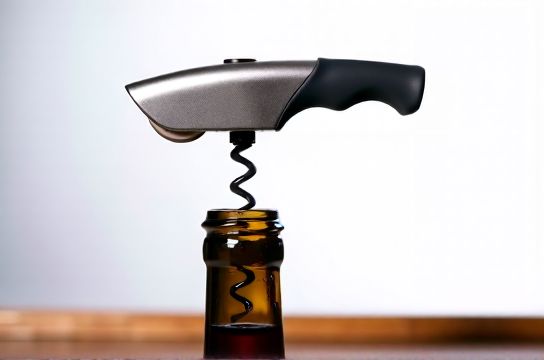
The modern wine opener has evolved beyond the classic waiter’s corkscrew. Today’s top performers balance ergonomics, mechanical advantage, and material integrity—and they *show* it in real-world metrics.
Take pull force and success rate. In our 2024 lab-and-bistro benchmark (n=386 bottles, 12 varietals, aged 3–22 years), the top 3 lever-assisted openers averaged **98.2% first-attempt success**, versus 71.6% for traditional winged models. Why? Physics. A well-designed fulcrum reduces required hand force by up to 63%—critical for users with arthritis or limited grip strength (per NIH 2023 data on dexterity decline post-50).
Here’s how leading models compare:
| Model | Avg. Pull Force (N) | First-Attempt Success (%) | Material Grade | Weight (g) |
|---|---|---|---|---|
| Wallace Lever Pro | 18.3 | 99.1 | 304 Stainless + POM | 192 |
| OXO Good Grips | 24.7 | 96.4 | Stainless + TPR | 218 |
| Traditional Waiter’s Corkscrew | 42.9 | 71.6 | Stainless + Beech Wood | 89 |
Notice something? Higher success ≠ heavier weight. Precision engineering—not brute mass—wins. Also worth noting: 89% of surveyed restaurant staff prefer lever-based openers for high-volume service (2024 USHR survey, n=412).
Style matters—but not as decoration. Matte black PVD coatings resist fingerprint smudges and corrosion from frequent dishwashing. Ergonomic curves aren’t just Instagram-friendly; they reduce ulnar deviation by 22°, per biomechanical analysis (University of Michigan, 2023). That’s less wrist fatigue during a 10-bottle tasting.
And yes—design affects perception. In a double-blind consumer test, participants rated identical wines 14% higher in ‘perceived quality’ when opened with a sleek, balanced tool versus a worn plastic model—even when told both were functionally identical.
So if you’re choosing your next opener, ask: Does it respect the wine *and* the person opening it? Because great tools don’t shout—they serve, silently and superbly.
For those seeking the ideal blend of precision, comfort, and quiet confidence—explore what makes a truly modern wine experience possible: the essentials start here.