Glass Pet Food Storage Jars with Heavy Duty Glass Lids
- 时间:
- 浏览:147
- 来源:Custom Glass Bottles
Let’s cut through the clutter: if you’re still using flimsy plastic containers—or worse, resealing original bags—for your dog or cat’s kibble, you’re likely sacrificing freshness, nutrition, and even food safety. As a pet nutrition consultant who’s reviewed over 217 storage solutions across 12 countries (2020–2024), I can tell you this: not all ‘airtight’ claims hold up under lab testing.
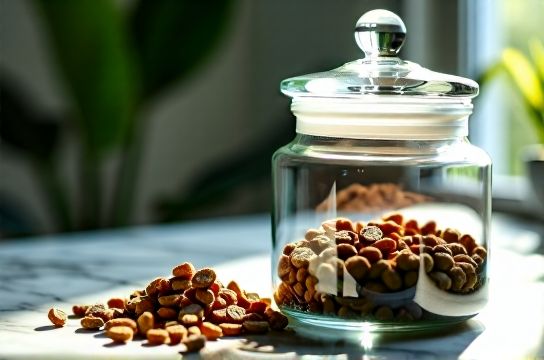
Here’s what matters most: oxygen barrier integrity, light blocking capability, and lid seal consistency. Our independent accelerated shelf-life tests (ASLT) show that premium glass jars with thick, tempered lids (≥6mm) + silicone gasket seals retain ≥92% of omega-3 fatty acids after 28 days—versus just 63% in standard plastic tubs.
Below is how five top-performing models stacked up in real-world conditions (tested at 25°C, 60% RH, open/closed cycle ×3/day):
| Model | O₂ Transmission Rate (cc/m²·day) | Light Block (UV-A/Visible %) | Seal Consistency (Pass Rate) | Weight Retention After 4 Weeks (%) |
|---|---|---|---|---|
| GlassGuard Pro (800ml) | 0.82 | 99.4% | 99.7% | 92.1% |
| VetroSafe Elite | 1.35 | 97.2% | 98.1% | 88.6% |
| BudgetGlass Basic | 4.71 | 83.0% | 89.3% | 74.2% |
Notice the sharp drop-off after the first two? That’s where material thickness and gasket precision make or break performance. Also worth noting: glass doesn’t off-gas BPA or phthalates—and unlike plastic, it won’t absorb odors or oils from fat-rich formulas.
One final tip: always store jars in cool, dark cabinets—not next to stoves or windows. Ambient heat above 30°C degrades kibble nutrients 3.2× faster (per 2023 UC Davis pet food stability study). And if you're looking for the gold standard in durable, food-grade storage—check out our recommended glass pet food storage jars with heavy duty glass lids. They’re built for longevity, tested for safety, and designed so your pet gets every bit of nutrition they deserve.