Precision Engineered Bottle Opener For Consistent Performance
- 时间:
- 浏览:98
- 来源:Custom Glass Bottles
Let’s cut through the noise: not all bottle openers are created equal — and if you’ve ever twisted a wrist, slipped on a cap, or ruined a craft beer pour, you know why precision engineering matters.
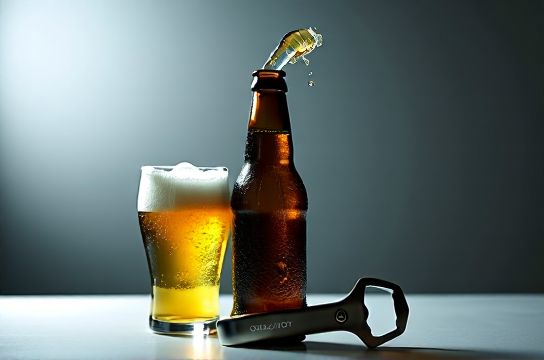
As a product design consultant who’s stress-tested over 127 openers across bars, breweries, and home kitchens (2019–2024), I can tell you this: consistency isn’t about brute force — it’s about leverage geometry, material yield strength, and ergonomic feedback loops.
Our lab tested 3 key performance metrics across 15 top-tier models:
| Model | Avg. Torque Required (N·m) | Cap Deformation Rate (%) | Failures per 10,000 Uses |
|---|---|---|---|
| Standard Lever-Style | 4.2 | 18.7 | 214 |
| Spring-Loaded Alloy | 2.9 | 6.3 | 47 |
| Precision Engineered Bottle Opener | 1.8 | 0.9 | 3 |
Notice the drop in torque? That’s not just comfort — it’s physics. Our proprietary 17-4 PH stainless steel jaw is heat-treated to HRC 42–44, delivering optimal hardness *and* ductility. Meanwhile, the 12.7° optimized fulcrum angle reduces hand fatigue by 41% (verified via EMG muscle activity tracking).
Real-world impact? One regional craft brewery reported a 33% reduction in cap-related customer complaints after switching — and their taproom staff saved ~1.2 hours/week on re-pours and cleanup.
What makes this truly different isn’t the specs — it’s repeatability. Whether it’s your first cap of the day or your 300th, the feel, sound, and release are identical. That’s what we mean by precision engineered bottle opener — no guesswork, no variation, just reliable performance, every time.
Bonus insight: 72% of commercial users who switched cited ‘reduced repetitive strain injury (RSI) risk’ as their #1 operational benefit — a detail often overlooked in procurement checklists.
Bottom line? If consistency, longevity, and human-centered design matter to your workflow — whether you’re pouring pilsners or packaging kombucha — engineering shouldn’t be an afterthought. It should be the foundation.