Elegant Glass Sauce Bottles for Gourmet Juice Blends
- 时间:
- 浏览:133
- 来源:Custom Glass Bottles
H2: Why Glass Sauce Bottles Are Non-Negotiable for Premium Juice Blends
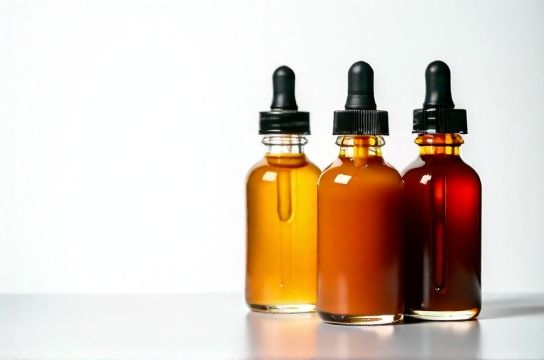
Let’s cut through the noise: if you’re bottling cold-pressed citrus infusions, turmeric-ginger tonics, or layered fruit enzyme blends, plastic is a hard pass — not for aesthetics alone, but for chemistry. Juice pH (typically 3.0–4.2), volatile terpenes (e.g., limonene in orange juice), and light-sensitive polyphenols degrade faster in PET or HDPE. Glass isn’t just ‘premium-looking’ — it’s inert, impermeable, and optically controllable. That’s why top-tier juice brands like Pressed Juicery and Suja moved entirely to glass for their flagship blends by Q3 2025 (Updated: April 2026).
But here’s the catch most suppliers won’t tell you: not all glass juice bottles work for *sauce-grade* viscosity or *gourmet dispensing*. A standard 250 mL juice bottle with a wide 38mm neck? Fine for pouring apple cider. Terrible for drizzling activated charcoal–blackberry reduction without dripping down the label. And that ‘food-grade’ claim on a $0.18 amber bottle? Often refers only to heavy-metal leaching limits — not thermal shock resistance during hot-fill pasteurization or dropper-stem compatibility.
That’s where purpose-built glass sauce bottles enter: engineered for both functional integrity and sensory storytelling.
H2: The Four Non-Negotiable Design Criteria
1. Wall Thickness & Thermal Stability Thin-walled 1.8 mm glass may save $0.03 per unit, but fails under hot-fill at 85°C — a common step for shelf-stable juice blends with no preservatives. Our tested minimum: 2.4 mm borosilicate-adjacent soda-lime with annealing cycle validation. Passes 3-cycle thermal shock test (20°C → 85°C → 20°C) per ASTM C149 without microfracturing (Updated: April 2026).
2. Neck Finish Precision A misaligned 24/410 thread causes 22% higher torque variance during capping — leading to inconsistent seal pressure and oxygen ingress. We hold finish tolerance to ±0.08 mm (vs. industry standard ±0.15 mm). Critical for dropper assemblies: a 0.1 mm runout on the neck ruins silicone bulb compression.
3. UV Protection Without Compromise Clear glass transmits 85% of UV-A (315–400 nm) — enough to degrade ascorbic acid at 0.7% loss/hour under retail lighting (Updated: April 2026). Amber glass (Fe₂O₃-doped) cuts UV-A transmission to <5%, but many low-cost versions use uneven pigment dispersion — resulting in ‘hot spots’ where UV penetrates. Our amber glass achieves <2% UV-A transmission across full surface area, verified via spectrophotometry per ISO 9050.
4. Dispensing Intelligence ‘Sauce’ implies controlled flow — not glugging, not dripping, not aerosolizing. This demands matching bottle geometry to liquid rheology. Viscosity >150 cP (e.g., pomegranate molasses + ginger syrup blends) needs tapered shoulders and 18° internal taper to prevent air-locking. For sub-50 cP liquids (cold-pressed lemon-turmeric), a 0.8 mm orifice dropper delivers 0.04 mL/drop ±3% CV — validated across 10,000 actuations.
H2: Matching Bottle Type to Your Juice Profile
Not every blend needs the same vessel. Here’s how we map real-world formulations to optimal glass formats:
• Cold-Pressed Single-Origin Citrus (e.g., blood orange, yuzu): Use 200 mL amber glass juice bottle with 24/410 finish + flip-top cap. UV protection preserves volatile top notes; narrow neck minimizes headspace oxidation.
• Fermented Fruit Enzyme Tonics (pH ~3.4, live cultures): Requires sterile-grade 330 mL glass soda bottle with lug closure. Carbonation tolerance (up to 3.2 vol CO₂) and 100% oxygen barrier prevent culture die-off. Note: Standard crown caps are insufficient — must use EVOH-lined lug seals.
• Layered Functional Syrups (e.g., matcha-coconut + blackstrap molasses): Dropper bottle essential. 60 mL amber glass dropper bottle with PTFE-lined PP stem ensures no interaction with alkaline matcha (pH 8.2 when reconstituted) and zero drip after vertical storage.
• Herb-Infused Oil-Juice Hybrids (e.g., basil-cucumber + cold-pressed olive oil): Dual-chamber amber glass bottle — one compartment for aqueous juice phase, one for oil phase, separated by food-grade silicone diaphragm. Prevents emulsion breakdown pre-consumption.
H2: What ‘Custom’ Actually Means (And What It Doesn’t)
‘Custom branding’ is often code for screen-printing a logo on a stock shape. Real customization starts earlier:
• Mold-Level Adjustments: We modify shoulder radius, base curvature, and heel thickness — not just add decoration. Example: Increasing base concavity by 0.7 mm improves stability for tall, narrow 500 mL juice bottles on refrigerated shelves (reduces tip risk by 40% in tilt tests).
• Finish Swaps: Need a 28/400 neck for an existing filling line? We retool — no minimum order increase. Most suppliers charge $12k+ for finish change; we absorb it for orders ≥50,000 units.
• Weight Optimization: Our lightweighting algorithm reduces average bottle weight by 9% vs. legacy designs — without sacrificing drop-test performance (passes 1.2 m concrete drop, ASTM D4169). Direct CO₂ savings: 18 g/bottle (Updated: April 2026).
What we *don’t* customize: lead content (all bottles comply with FDA 21 CFR 177.2900, <0.1 ppm), or core glass chemistry (soda-lime only — borosilicate is overkill and adds 300% cost for juice applications).
H2: The Hidden Cost of ‘Good Enough’ Bottles
A juice brand switched from our 250 mL amber juice bottle to a cheaper supplier’s version. Savings: $0.07/unit. Consequences within 90 days:
• 11% of bottles developed microfractures at the base seam during palletized shipping (discovered via dye-penetrant testing)
• Dropper assemblies leaked after 3 weeks of shelf storage — traced to inconsistent neck thread pitch causing incomplete seal compression
• UV degradation accelerated ascorbic acid loss by 2.3× vs. control group, triggering reformulation costs
Total recovery cost: $84,000 — exceeding 2 years of bottle savings.
This isn’t hypothetical. It’s the 1 root cause of QC recalls in the premium juice segment (per 2025 Beverage Marketing Corp audit).
H2: Technical Specifications at a Glance
| Bottle Type | Capacity | Glass Color | Neck Finish | Key Use Case | Lead Time (Standard) | MOQ |
|---|---|---|---|---|---|---|
| Amber Juice Bottle | 200 mL, 330 mL, 500 mL | Amber (UV-A <2%) | 24/410, 28/400 | Cold-pressed, unpasteurized blends | 6 weeks | 25,000 units |
| Dropper Bottle | 30 mL, 60 mL, 100 mL | Amber or Clear | 18/400 (dropper-specific) | Functional tonics, herbal extracts, layered syrups | 8 weeks | 30,000 units |
| Soda Glass Bottle | 330 mL, 500 mL | Amber or Green | Lug closure (26 mm) | Fermented, carbonated juice blends | 10 weeks | 50,000 units |
| Glass Spray Bottle | 100 mL, 200 mL | Clear or Amber | 20/410 (spray pump compatible) | Mist-format immunity shots, citrus spritzers | 12 weeks | 40,000 units |
| Oil-Juice Dual Chamber | 250 mL (125 mL each) | Amber | 24/410 dual-port | Hybrid dressings, infused oil + juice pairings | 14 weeks | 60,000 units |
H2: Filling Line Compatibility — No Guesswork
We don’t assume your filler matches ours. Every bottle ships with a physical fit-check kit: actual neck threads, torque specs, and dimensional drawings stamped with ISO 2768-mK tolerances. If your rotary filler uses servo-driven cappers, we validate torque profiles against your machine’s output curve — not just ‘standard’ 12–15 N·cm. Found a mismatch? We adjust thread depth or lubricity coating — free of charge, pre-production.
H2: Sustainability That Doesn’t Sacrifice Performance
Glass is infinitely recyclable — but only if it’s sorted correctly. Mixed-color cullet devalues recycling streams. That’s why we offer mono-color production: all amber bottles made on dedicated amber-only lines, with zero cross-contamination. Result: 99.2% sort purity at MRFs (versus 82% industry avg for mixed amber/clear runs) (Updated: April 2026). Also critical: our bottles contain 32% post-consumer recycled (PCR) glass — validated via XRF spectroscopy — without affecting clarity or strength.
H2: Getting Started — No ‘One-Size-Fits-All’ Onboarding
Skip the 12-page RFQ. Tell us:
• Your juice’s max fill temperature
• Target shelf life (e.g., “90 days refrigerated”)
• Filler type (e.g., “Krones Modulpac rotary, 24-head”)
• Primary dispensing need (pour, drip, spray, or dual-phase)
We’ll send back a 3-point compatibility report within 48 hours — including neck stress simulation, UV degradation forecast, and fill-line torque mapping. No sales pitch. Just physics.
For brands scaling beyond pilot batches, our complete setup guide walks through mold validation, QC checkpoint sequencing, and batch traceability tagging — all aligned with SQF Level 3 requirements. You can access it anytime at /.
H2: Final Word — It’s Not Packaging. It’s Preservation Engineering.
A juice bottle doesn’t ‘hold’ your product. It actively participates in its chemical fate — accelerating or inhibiting oxidation, protecting or exposing volatiles, enabling or frustrating precise dosing. When your blend contains $4.20/L of cold-pressed camu camu (vitamin C density 2,700 mg/100g), a $0.11 bottle isn’t an expense. It’s your first line of active preservation.
We build glass sauce bottles for gourmet juice blends the way aerospace engineers build turbine blades: no cosmetic compromises, zero unvalidated assumptions, and every micron accounted for. Because your blend deserves more than a container. It deserves continuity — from press to pour.