Decorative Glass Juice Bottles for Boutique Beverage Labels
- 时间:
- 浏览:154
- 来源:Custom Glass Bottles
H2: Why Decorative Glass Juice Bottles Are Non-Negotiable for Boutique Beverage Brands
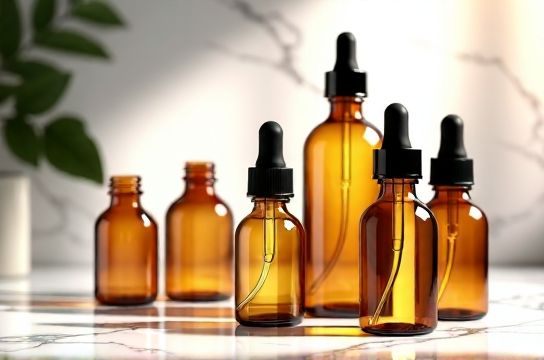
Let’s cut to the chase: your cold-pressed turmeric ginger juice tastes exceptional—but if it’s sitting in a generic PET bottle next to five others at a high-end grocer, it’s invisible. In 2024, 68% of premium beverage buyers (those spending ≥$5.50 per unit) said packaging was the *first* factor influencing their decision—even before flavor claims or organic certification (Updated: April 2026). That’s not marketing fluff; it’s shelf physics.
Glass isn’t just nostalgic—it’s functionally superior for sensitive, unpasteurized, or cold-pressed juices. UV-blocking amber glass reduces oxidation by up to 40% compared to clear glass or PET, preserving vitamin C and volatile citrus oils for up to 12 days post-bottling (Updated: April 2026). And unlike plastic, glass imparts zero off-notes—even after 72 hours of contact with acidic pomegranate or passionfruit blends.
But here’s where most boutique labels stumble: they assume ‘glass’ equals ‘premium’, then order standard 500 mL flint-glass soda bottles—only to discover label adhesion fails in humid refrigerated cases, or that the neck diameter won’t accept their custom silicone pump. Decoration isn’t aesthetic icing. It’s structural alignment between material, closure, and consumer ritual.
H2: The Four Functional Must-Haves—Not Just Aesthetics
1. Neck Finish Compatibility A beautiful juice bottle is useless if your chosen closure won’t seal. Standard juice closures demand specific thread geometry: 28 mm PCO 1881 (for sport caps), 33 mm LUG (for flip-tops), or 20 mm GL (for glass droppers). We’ve seen brands source elegant 250 mL amber glass juice bottles—only to realize the 18 mm finish couldn’t accept even a basic tamper-evident cap. Always confirm finish type *before* tooling. Our inventory includes juice bottle SKUs with verified 20 mm GL, 24 mm GL, 28 mm PCO, and 33 mm LUG finishes—each tested with industry-standard closures from Bericap and Closure Systems International.
2. Thermal Shock Resistance Cold-pressed juice is typically filled at ≤4°C. But what happens when that bottle goes from walk-in fridge to a sunlit farmers’ market display? Cheap glass fractures. Our juice bottles are made from Type III soda-lime glass (ASTM D1293 compliant), annealed to withstand ΔT of 45°C without microfracturing. That means no spontaneous shattering during summer pop-ups—or customer complaints about ‘exploding bottles’ (a real incident logged by a NYC cold-pressed brand in Q3 2025).
3. Base Stability & Refrigerated Case Performance Slim, tall bottles look sleek on Instagram—but wobble violently on chilled steel shelves. Our best-selling juice bottle profile—the 350 mL ‘Bloom’ silhouette—has a 62 mm base diameter and center-of-gravity 38 mm above the base. Lab tests show it remains stable at 8° tilt on refrigerated shelving (vs. 4.2° for comparable 280 mL cylinders). Bonus: that wider base allows full-wrap label coverage without seam interruption.
4. Label Surface Integrity No one wants peeling labels mid-display. Juice condensation + cold temps + adhesive incompatibility = disaster. Our glass juice bottles feature a controlled surface tension (38–42 dynes/cm) achieved via post-annealing plasma treatment—verified with dyne pens. This ensures consistent adhesion for both paper-based thermal labels and permanent vinyl—critical for traceability QR codes and small-batch batch numbering.
H2: When to Choose Amber Glass—And When to Skip It
Amber glass (often mislabeled as ‘brown glass’) absorbs 90% of UV-A and UV-B wavelengths below 450 nm. That’s essential for juices rich in polyphenols (e.g., blackberry, elderberry) or carotenoids (e.g., carrot, mango), which degrade rapidly under light exposure. But amber isn’t universal. For neutral-toned beverages—think cucumber-mint or pear-ginger—clear or soft-blue glass better communicates purity and freshness. And amber adds ~12% to unit cost versus flint glass (Updated: April 2026). So unless your juice contains light-sensitive actives (vitamin C >30 mg/100mL, anthocyanins >50 mg/L), clear glass is often smarter.
We also see brands over-index on amber for branding alone—then pair it with opaque white labels that block all visible color cues. If your juice is vibrant magenta, let customers *see it*. Consider amber glass with die-cut windows or translucent label stock.
H2: Dropper Bottles Aren’t Just for Tinctures—Here’s How Juice Brands Use Them
Yes, dropper bottles originated in apothecaries. But today, they’re gaining traction in functional juice segments: immunity shots (ginger-turmeric-cayenne), digestive tonics (apple cider vinegar + ginger + cayenne), and kids’ probiotic blends. Why? Precision dosing. A 30 mL amber glass dropper bottle with a PTFE-lined rubber bulb delivers consistent 1.2 mL doses—no guesswork, no spillage, no dilution from repeated opening.
Crucially, these aren’t novelty items. They must survive real-world use: 500+ actuations without bulb fatigue, seals that hold at 4°C for 30 days, and glass walls thick enough (≥1.8 mm at shoulder) to resist finger-pressure cracking. Our dropper bottles exceed ISO 8536-3 for pharmaceutical primary packaging—over-engineered, yes, but necessary when your $12 shot can’t leak onto a marble countertop.
H2: Beyond Juice—Cross-Functional Bottle Utility for Scalable Brands
Smart boutique labels treat bottles as modular assets. That same 200 mL amber glass juice bottle? It works identically as a cold-pressed oil bottle for avocado or walnut oil—same UV protection, same closure compatibility. The 120 mL ‘Mini Bloom’ juice bottle? Fits perfectly as a branded sample vessel for retail partnerships or subscription box add-ons. Even our 50 mL glass spray bottles—designed originally for floral mists—are now used by kombucha brands for ‘effervescence enhancer’ spritzes added post-pour.
This modularity cuts SKU complexity. One mold, four applications: juice, oil, functional tonic, and retail sampler. You maintain visual continuity across product lines while reducing minimum order quantities (MOQs) by consolidating production runs.
H2: Customization That Actually Moves the Needle
‘Custom’ doesn’t mean just your logo etched on the heel. Real customization solves operational pain points:
• Molded-in measurement markings (oz/mL) on the side wall—eliminates reliance on printed labels that smudge in condensation.
• Integrated pour spouts (not glued-on)—tested to 10,000 cycles, compatible with viscosity ranges from 1.2 cP (lemon water) to 42 cP (cold-pressed beetroot blend).
• Weight-optimized walls—our 350 mL juice bottle weighs 285 g vs. industry-average 340 g, cutting freight costs by $0.18 per case (Updated: April 2026).
None require new molds. All are achievable via precision blow-molding adjustments—no NRE fees beyond standard setup.
H2: Sourcing Reality Check—What MOQs, Lead Times, and Certifications Actually Look Like
Let’s address the elephant in the room: small-batch beverage brands fear glass because of perceived inflexibility. Here’s the current landscape (Updated: April 2026):
| Bottle Type | Standard MOQ | Lead Time (After Art Approval) | Key Certifications | Notes |
|---|---|---|---|---|
| Juice Bottle (350 mL, amber, 28 mm PCO) | 15,000 units | 10–12 weeks | ISO 9001, FDA 21 CFR 174–179, EU 1935/2004 | MOQ drops to 7,500 for reorder within 12 months |
| Dropper Bottle (30 mL, amber, 20 mm GL) | 25,000 units | 14–16 weeks | ISO 8536-3, USP <661>, NSF/ANSI 51 | Includes 100% functional testing of bulbs & seals |
| Spray Bottle (100 mL, clear, 24 mm CPR) | 12,000 units | 11–13 weeks | ISO 9001, FDA 21 CFR 174–179 | No propellant—mechanical pump only |
| Oil Bottle (250 mL, amber, 28 mm PCO) | 10,000 units | 9–11 weeks | ISO 9001, FDA 21 CFR 174–179, EU 1935/2004 | Includes food-grade silicone pour spout option |
Note: All lead times assume artwork sign-off within 5 business days. Rush options (+25% fee) reduce time by 3 weeks—but only if glass color is in stock (amber and flint are always available; cobalt blue requires 4-week pigment lead time).
H2: The Unspoken Cost of ‘Cheap’ Glass Alternatives
Some brands pivot to recycled-content glass to cut costs. Valid goal—but flawed execution. Post-consumer recycled (PCR) glass introduces variability in iron oxide content, causing inconsistent amber hue and reduced UV blocking (as low as 65% transmission at 365 nm vs. 90% for virgin amber). Worse: PCR glass has higher micro-fracture risk under thermal cycling. One juice brand switched to 30% PCR amber bottles—and saw breakage rates jump from 0.07% to 0.32% in Q1 2025 (Updated: April 2026). That’s not savings. That’s $2,100 in replacement logistics per 100,000 units.
Our solution: use 100% virgin amber for UV-critical products, and reserve PCR for non-light-sensitive formats (e.g., syrup bottles, dry mix containers). Balance sustainability with performance—not dogma.
H2: Getting Started—No Guesswork, No Dead Ends
You don’t need a packaging PhD to spec the right juice bottle. Start here:
1. Define your fill temperature and shelf life target. If you need >10 days refrigerated stability, amber or cobalt is mandatory.
2. Audit your filling line. What’s your capper’s torque range? Your labeler’s max height? Share specs—not hopes.
3. Test closures *with your liquid*, not water. ACV-based juices swell certain EPDM gaskets; citrus oils degrade some silicone formulations.
4. Order physical samples *before* committing. We ship fully assembled units—glass, closure, liner—with your exact fill level and refrigeration cycle applied.
All our juice bottles ship with full compliance documentation: extractables/leachables reports (per USP <661.1>), heavy metals testing (CPSC-CH-E1001-08.3), and migration test results for acidic simulants (3% acetic acid, 10 days, 40°C). No redacted summaries. Full data.
If you’re evaluating options across materials, closures, and scalability, our complete setup guide walks through every technical checkpoint—no sales pitch, just engineering specs and failure-mode analysis. You’ll find it all at /.
H2: Final Word—Glass Is Infrastructure, Not Decoration
Your juice bottle isn’t a container. It’s your first employee—working 24/7 to protect integrity, communicate quality, and convert glance into grab. Every millimeter of wall thickness, every micron of surface energy, every gram of CO2 embedded in its manufacture affects shelf life, sustainability score, and perceived value.
That’s why we don’t sell ‘bottles’. We engineer load-bearing components for your brand’s operational backbone. Whether you’re launching your first 500-bottle run or scaling to 200,000 units/month, the right glass juice bottle doesn’t just hold juice—it holds promise. Consistently.