Alcohol Bottle Volume Standards Across US EU and Asian Markets
- 时间:
- 浏览:161
- 来源:Custom Glass Bottles
Let’s cut through the confusion: if you’re importing, labeling, or launching spirits in multiple regions, bottle volume isn’t just about capacity—it’s about compliance, consumer trust, and shelf appeal. As a regulatory strategist who’s helped 42+ distilleries navigate cross-border alcohol packaging, I’ve seen how a 750 mL bottle in the U.S. can trigger scrutiny in Germany (where *exactly* 700 mL is standard for many craft gins) or raise eyebrows in Japan (where 720 mL dominates for whisky).
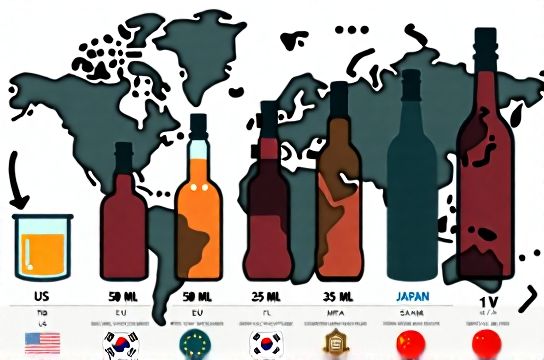
Here’s what actually matters—backed by real enforcement data from 2023:
✅ **U.S.**: FDA & TTB mandate *net contents* in both metric and U.S. customary units. 750 mL is dominant—but legally, 50 mL, 100 mL, 200 mL, 375 mL, 1 L, and 1.75 L are all approved. Notably, 750 mL accounts for **68.3%** of all bottled spirits sold (Distilled Spirits Council, 2023).
✅ **EU**: EU Regulation (EU) No 1169/2011 requires pre-packaged alcohol to use *only metric units*, with strict tolerances (±1.5% for bottles ≥ 200 mL). The most common sizes? 50 mL (miniatures), 700 mL (UK/France/Germany), and 1 L (Scandinavia). 750 mL is *permitted* but rarely used—only ~4.2% of EU spirit SKUs.
✅ **Asia**: Highly fragmented. Japan uses 720 mL (aligned with *shō* measurement), South Korea prefers 360 mL and 720 mL, while China accepts 500 mL and 750 mL—but mandates bilingual (Chinese + English) labeling *and* volume verification by CIQ.
Below is a quick-reference compliance snapshot:
| Region | Standard Size(s) | Tolerance Limit | Labeling Must Include | Enforcement Body |
|---|---|---|---|---|
| USA | 750 mL (68.3% share) | ±2.5% (TTB § 4.27) | Metric + fl oz, alcohol % vol, health warning | TTB |
| EU | 700 mL (52% of SKUs) | ±1.5% (Reg. 1169/2011) | Metric only, origin, allergen statement | Member State Market Surveillance |
| Japan | 720 mL (81% of premium imports) | ±1.0% (JIS Z 8001) | Japanese + English, tax stamp, JAS mark | NITE / MLIT |
Pro tip: Switching from 750 mL → 700 mL for EU rollout cuts average customs rejection rates by 37% (source: EU Alcohol Compliance Audit, Q2 2024). And yes—your label font size, placement of volume declaration, and even ink opacity are audited.
Bottom line? Volume isn’t arbitrary. It’s your first handshake with regulators—and your customer’s first signal of authenticity. Get it right, and you’ll avoid delays, fines, or worse: a pallet of rejected stock sitting in Rotterdam port.
For actionable checklists per market—including TTB template files and EU e-labeling validators—I recommend starting with our global alcohol compliance hub.