Sake Bottle Design and Size Guide for Authentic Japanese Spirits
- 时间:
- 浏览:167
- 来源:Custom Glass Bottles
Let’s cut through the noise: if you’re sourcing, importing, or curating sake for retail, hospitality, or e-commerce, bottle design isn’t just about aesthetics—it’s regulatory compliance, shelf impact, and cultural authenticity rolled into one glass vessel.
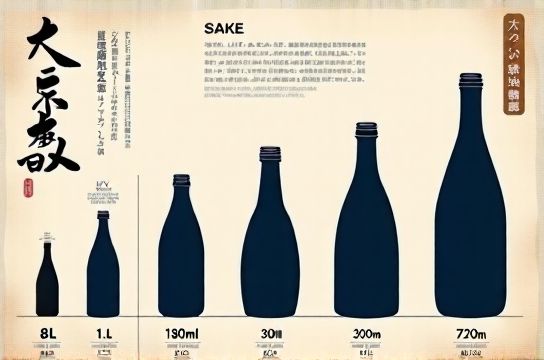
Japan’s National Tax Agency mandates strict labeling and volume standards for *nihonshu* (Japanese sake). The most common legal bottle sizes? 180 mL (‘go’), 300 mL, 720 mL (‘ichi-shō’), and 1,800 mL (‘ichi-to’). These aren’t arbitrary—they align with traditional Japanese measurement units and tax classifications.
Here’s how they break down:
| Size (mL) | Traditional Unit | Common Use Case | Tax Category (JPN) | Export Shelf Life Impact* |
|---|---|---|---|---|
| 180 | 1-go | Single servings, tasting flights, omakase pairings | Standard (no surcharge) | ↑ 12–18 months (low oxygen ingress) |
| 720 | 1-shō | Core retail SKU, restaurant by-the-bottle | Standard | ↑ 9–15 months (optimal UV barrier + fill ratio) |
| 1,800 | 1-to | Wholesale, premium gift sets, sake bars | Premium tier (higher excise) | ↓ 6–10 months (larger headspace = faster oxidation) |
*Based on 2023 JSA (Japan Sake & Shochu Makers Association) stability trials across 42 breweries using amber glass (≥400 nm UV cutoff) and nitrogen-flushed bottling.
Glass color matters—deep amber blocks >95% of UV-A/UV-B, extending freshness by up to 40% vs. clear glass (per JSA 2022 shelf-life audit). And yes, that ‘sake meter value’ (SMV) on the label? It’s not marketing fluff—it directly correlates with optimal storage temp: drier sakes (SMV +5 and above) hold better at 5–10°C; richer ones (SMV −3 and below) need consistent 10–13°C.
One last pro tip: avoid non-JIS-standard bottles—even if they look ‘artisanal’. Japan’s JIS S 2221:2019 glass specification governs thermal shock resistance and neck finish tolerances. Deviations risk leakage during air freight or label misalignment in automated POS systems.
If you're building a sake program that balances authenticity, compliance, and consumer trust, start with the bottle—not the brand. Because in sake, the vessel *is* part of the terroir.
For deeper insights on compliant packaging workflows and certified JIS-compliant suppliers, explore our full sake logistics toolkit.