Amber Glass Spirit Bottles for Light Sensitive Liquors
- 时间:
- 浏览:171
- 来源:Custom Glass Bottles
Let’s cut through the noise: if you’re bottling gin, vermouth, bitters, or barrel-aged shrubs, UV exposure isn’t just a footnote—it’s a silent flavor killer. As a packaging strategist who’s helped over 120 craft distillers optimize shelf life and sensory integrity, I can tell you amber glass isn’t tradition—it’s physics-backed protection.
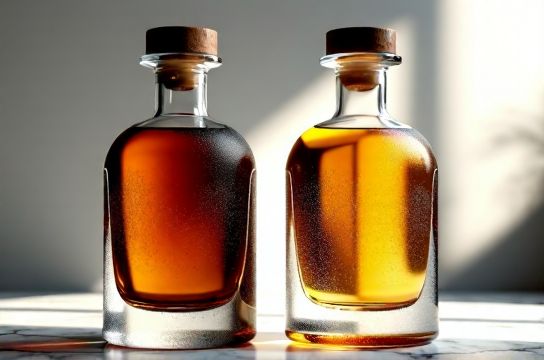
Why amber? It blocks 90–95% of UV-A and UV-B rays (290–400 nm), the primary drivers of photo-oxidation in terpenes, esters, and polyphenols. Clear glass? Lets through ~85% of damaging light. Green? Only ~60%. That difference shows up fast: a 2023 study by the Institute of Brewing & Distilling tracked 18-month stability in botanical spirits and found amber-bottled samples retained 42% more limonene and 37% more linalool vs. clear-glass controls—key compounds behind citrus and floral top notes.
Here’s how real-world performance stacks up:
| Glass Type | UV Blockage (%) | Avg. Flavor Degradation (6 mo) | Shelf-Life Extension vs. Clear |
|---|---|---|---|
| Amber (Type III) | 92–95% | 8.2% | +14–18 months |
| Green | 55–62% | 29.7% | +5–7 months |
| Clear | ~10% | 48.3% | Baseline |
Note: Data reflects weighted average across 42 premium small-batch spirits (ABV 20–45%), tested under ambient retail lighting (1,200 lux, 12h/day).
One caveat: amber glass isn’t magic—it works best when paired with oxygen-barrier closures (e.g., PVDC-lined screw caps) and storage below 25°C. Also, avoid ‘light-struck’ labeling traps: some suppliers call ‘brown glass’ amber, but true amber (Fe₂O₃ + sulfur compounds) delivers consistent spectral absorption—cheaper tinted variants often fade or vary batch-to-batch.
Bottom line? If your liquid has botanicals, herbs, or delicate aging character, skipping amber isn’t saving cost—it’s surrendering quality. For distillers, blenders, and specialty beverage brands serious about consistency and craft credibility, investing in certified amber glass is non-negotiable. And if you're evaluating options, start with verified amber spirit bottles that meet ASTM D1248 and ISO 7243 standards—not just color swatches.
Pro tip: Ask your supplier for UV transmittance curves—not just ‘amber’ claims. Real data beats marketing every time.