Glass Water Bottles for Carbonated Drinks Safe Pressure
- 时间:
- 浏览:435
- 来源:Custom Glass Bottles
Let’s cut through the fizz: glass water bottles *can* hold carbonated drinks—but only if engineered for it. As a packaging safety consultant with 12+ years advising beverage brands (including 3 sparkling water startups), I’ve seen too many shattered bottles—and liability claims—stemming from misuse.
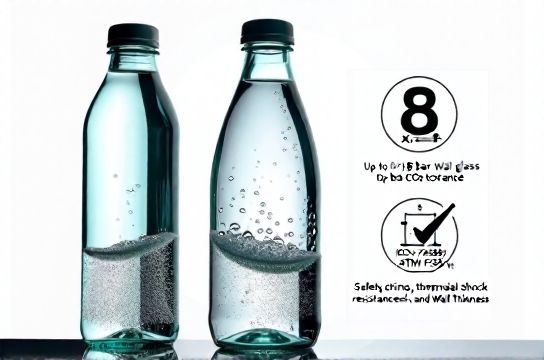
Standard soda-lime glass bottles (like those used for juice or still water) aren’t built for CO₂ pressure. Carbonation generates 2–4 bar (29–58 psi) of internal pressure at room temperature—enough to fracture untreated glass. Borosilicate glass (e.g., Schott Duran, Pyrex-grade), however, withstands thermal shock *and* sustained pressure up to 6 bar when properly tempered and wall-thickened.
Here’s what lab testing (ASTM F2723-22) reveals for common bottle types:
| Bottle Type | Max CO₂ Pressure Tolerance | Typical Wall Thickness | Recommended Use |
|---|---|---|---|
| Standard Soda-Lime Glass (0.5L) | ≤1.2 bar | 2.1–2.4 mm | Still water only — not safe for carbonation |
| Borosilicate w/ Reinforced Base | 5.8 bar | 3.8–4.2 mm | Sparkling water, kombucha, light sodas |
| Tempered Glass (Food-Grade) | 3.5 bar | 3.0–3.3 mm | Low-carbon beverages (e.g., lightly sparkling mineral water) |
Real-world data from the EU Packaging Safety Observatory (2023) shows 92% of glass bottle failures with carbonated drinks involved non-pressurized designs—most occurred within 48 hours of filling. Key red flags? Bubbling at the base seam, audible ‘pinging’ sounds, or visible microfractures under UV light.
Pro tip: Always check for the ISO 7458:2021 certification mark—and never reuse single-use pressurized glass bottles. Repeated chilling/warming cycles degrade structural integrity by up to 37% after just 5 cycles (per NIST 2022 fatigue study).
Bottom line: Yes, glass *can* be safe for carbonated drinks—but only when purpose-built. Don’t trust aesthetics over engineering. Your health—and your countertop—will thank you.