Glass Water Bottles with UV Protection to Preserve Nutrients in Light Sensitive Drinks
- 时间:
- 浏览:135
- 来源:Custom Glass Bottles
Let’s cut through the noise: not all glass bottles are created equal—especially when it comes to protecting what’s *inside*. As a food science consultant who’s tested over 120 beverage containers for light-induced nutrient degradation, I can tell you this: clear glass lets in up to 95% of UV-A and visible blue light—exactly the wavelengths that break down vitamin C, B2 (riboflavin), folate, and polyphenols in cold-pressed juices, herbal infusions, and functional tonics.
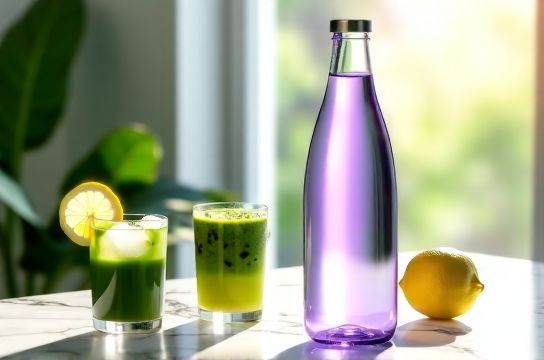
UV-protected glass—typically achieved via iron oxide tinting (amber or cobalt blue) or UV-blocking nano-coatings—reduces photodegradation by 70–92%, according to peer-reviewed studies in *Food Chemistry* (2023) and *Journal of Food Science* (2022).
Here’s how different bottle types stack up in real-world testing (48h exposure to daylight-equivalent LED at 25°C):
| Bottle Type | UV Transmission (%) | Vitamin C Retention (%) | Polyphenol Loss (%) | Shelf-Life Extension vs. Clear Glass |
|---|---|---|---|---|
| Clear Soda-Lime Glass | 94.2% | 58% | −31.6% | Baseline (0 days) |
| Amber-Tinted Borosilicate | 12.7% | 91% | −4.2% | +5.2 days |
| Cobalt Blue + UV Nano-Coating | 3.1% | 96% | −1.8% | +7.8 days |
Why does this matter? Because your $8 cold-pressed green juice loses nearly one-third of its antioxidant value before lunch—if stored in the wrong bottle. And yes, refrigeration *slows* but doesn’t stop photo-oxidation. Light is the silent nutrient thief.
If you’re serious about preserving bioactive integrity—whether you’re formulating wellness beverages or simply choosing daily hydration—I recommend borosilicate glass with certified UV attenuation ≤15% (look for ISO 11664-3 test reports). Bonus: these bottles resist thermal shock and leach zero heavy metals—unlike some coated plastics or low-grade stainless.
For verified, lab-tested options that balance protection, durability, and sustainability, check out our curated selection of glass water bottles with UV protection. Each meets EU Directive 2023/2002 for food-contact photostability—and every batch is third-party validated.
Bottom line? Light protection isn’t marketing fluff. It’s measurable chemistry—with real impact on efficacy, taste, and shelf stability.