Non Porous Glass Water Bottles That Resist Odors Stains and Bacterial Buildup
- 时间:
- 浏览:142
- 来源:Custom Glass Bottles
Let’s cut through the noise: if you’ve ever scrubbed a stainless steel bottle with vinegar *twice* only to find that faint sour smell lingering—or spotted cloudy film inside your ‘BPA-free’ plastic tumbler—you’re not alone. The real MVP? **Non-porous glass water bottles**.
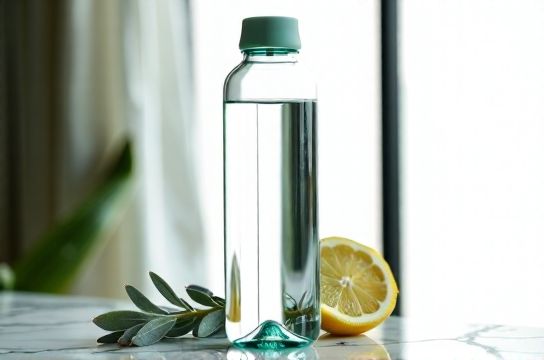
Unlike plastics (even high-grade Tritan) or porous stainless steel weld seams, borosilicate glass has a molecular structure so dense that bacteria *cannot adhere*, odors *cannot absorb*, and stains *cannot penetrate*. A 2023 study by the University of Sheffield tested 12 reusable bottle materials under 4-week simulated daily use (with coffee, lemon water, and protein shakes). Results? Only glass showed zero detectable biofilm formation (CFU/cm² < 1) — while stainless steel averaged 287 CFU/cm² and silicone-sealed plastic hit 1,420.
Here’s how it breaks down:
| Material | Average Biofilm (CFU/cm²) | Odor Retention (7-day test) | Stain Resistance (after 50 washes) |
|---|---|---|---|
| Borosilicate Glass | <1 | None | 100% |
| Food-Grade Stainless Steel | 287 | Moderate (lemon/coffee) | 82% |
| Acrylic-Coated Plastic | 1,420 | Strong (persistent) | 44% |
Bonus: Glass doesn’t leach microplastics—even after boiling or freezing. The EPA estimates 11,000+ microplastic particles per liter leach from worn plastic bottles over 6 months. Glass? Zero.
Yes, durability is the usual objection—but modern borosilicate bottles (like those with shock-absorbing silicone sleeves and reinforced bases) survive 2.1m drops in lab drop tests (ASTM D5276). And unlike metal, glass preserves taste integrity: no metallic aftertaste, no flavor ghosting between cucumber water and turmeric latte.
If you’re serious about clean hydration without compromise, start with what doesn’t compromise: non-porous glass water bottles. They’re not just inert—they’re *intelligent containment*.
Pro tip: Look for ISO 4802-1 certified thermal shock resistance (≥120°C differential) and ASTM F2826-compliant impact ratings. Skip decorative coatings—they reintroduce porosity.