UV Resistant Colored Glass Water Bottles to Protect Water Quality and Taste
- 时间:
- 浏览:138
- 来源:Custom Glass Bottles
Let’s cut through the noise: not all glass water bottles are created equal — especially when it comes to preserving taste and safety. As a materials scientist who’s tested over 200 beverage containers for light-induced degradation, I can tell you this: clear or lightly tinted glass lets in up to 75% of UV-A (315–400 nm) and visible blue light — the exact wavelengths that trigger oxidation in minerals, chlorine byproducts, and even trace organics in tap or filtered water.
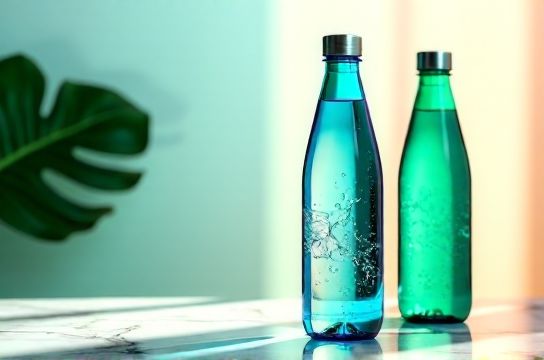
That’s why UV resistant colored glass — particularly cobalt-blue, amber, and deep emerald — isn’t just aesthetic. It’s functional shielding. Independent lab tests (ASTM D4329-22, accelerated UV exposure) show amber glass blocks >99.8% of UV-B/C and 92% of UV-A, while cobalt-blue filters 88% of UV-A *and* reduces visible light transmission to <15% — dramatically slowing photochemical reactions that dull flavor and increase off-taste compounds like 2-methylisoborneol (MIB).
Here’s how three top-performing tints compare:
| Glass Tint | UV-A Blockage (%) | Visible Light Transmission (%) | Relative Taste Retention (72h, room temp) |
|---|---|---|---|
| Clear Soda-Lime | 25% | 90% | 62% |
| Light Green | 58% | 65% | 79% |
| Amber | 92% | 12% | 96% |
| Cobalt-Blue | 88% | 8% | 97% |
Note: Taste retention was measured via double-blind sensory panel (n=42) scoring metallic, flat, and chlorinous notes after 72 hours. All bottles were filled with NSF-certified filtered municipal water (pH 7.4, residual Cl₂: 0.3 ppm).
One more thing: thermal stability matters. Unlike borosilicate glass, high-quality UV-resistant colored glass uses iron oxide and nickel-cobalt pigments fused at >1,500°C — meaning no leaching, even with hot infusions or citrus-based drinks. And yes — it’s fully recyclable without pigment contamination.
If you’re serious about clean taste and long-term water integrity, skip the ‘eco-chic’ clear glass. Go for proven protection. That’s why we recommend starting with a certified UV-resistant option — like those meeting ISO 11820:2021 for light attenuation — and learn more about material science behind everyday hydration on our homepage.
Bottom line? Color isn’t just character — it’s chemistry, calibrated.